
Happy Chinese New year! Gong Xi Fat Cai. This is your beginners guide to Chinese New Year traditions.
I am probably catching you at a very Chinese time in your life right now, and as you are newly Chinese now (welcome), let me get you up to date with the Chinese New Year Customs and Traditions.
Chinese New Year, also called Lunar New Year or Spring Festival in other cultures, is one of the largest celebrations in the world and runs for 15 days till Lantern Festival. And each day has it’s own traditions and customs in some ways especially the Lantern Festival.
As a wasian, Chinese New Year is one of my favourite celebrations, and honestly, I’m not just saying that because I’m half Chinese. I’ll admit I loved getting thick red packets from married relatives and older relatives is a highlight other than the food. Don’t judge, but seriously who doesn’t like getting money as presents?! Especially a couple of months after Christmas, double presents!
Chinese New Year is filled with traditions and customs, and it’s mainly very family-orientated and has a lot to do with bringing good luck and success for the rest of the year. And I think that everyone needs good luck and success every year.
If you’re curious about Chinese New Year, heading to a celebration in 2026, or you’re just here because you want to know why your Chinese friend won’t wash their hair on New Year’s Day, this guide is for you. I’m breaking down all the traditions, the taboos (and there are SO many taboos), and everything you need to know.
Quick Info: Chinese New Year 2026 falls on Tuesday, February 17, 2026 , marking the Year of the Horse. Celebrations run for 15 days until the Lantern Festival on March 3, 2026.
Just a heads up! This post may contain affiliate links, meaning I get a commission if you decide to purchase something through the links, at no additional cost to you. Your support helps me continue doing what I love and continue to provide you with free Travel guides. Thank you!
Quick recommendations if you are traveling to China for Chinese New Year, or South East Asia for Lunar New Year/Chinese New Year:
Hotels: Expedia or Booking.com has been very reliable for me
Experiences or Excursions: Trip.com is great for China, or Traveloka or Klook for South East Asia
🗺️ Insurance: Protect yourself on your trip with Travel Medical Insurance.
📱 Connect: Always stay connected, and do so seamlessly, with an eSim!
🚗 Traveling around Japan? Discover Affordable Car Rentals here!
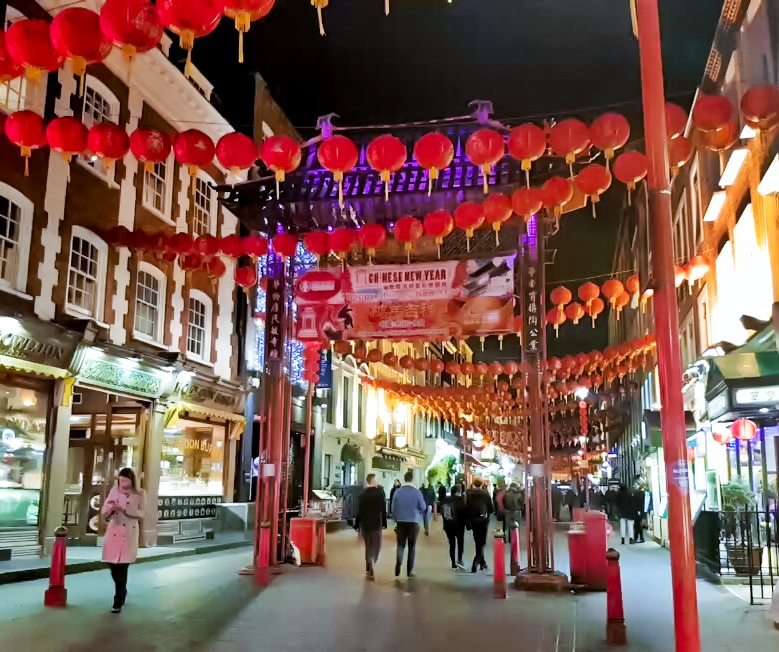
And don’t forget to wish someone Happy Chinese New year in Mandarin, you say Gong Xi Fa Cai.
Pronounced phonetically as “Kung See Fa Chai”. Gong Xi means congratulations and Fa Cai means to become wealthy or to make money. Traditionally it is good to say the whole sentence but you can also wish someone Gong Xi.
If you’re in Hong Kong, Macau, or around Cantonese-speaking communities, you’d say “Gung Hey Fat Choy” same meaning, different dialect.
Below is an insight into the traditions and rituals for Chinese New Year including a few taboos!
When is Chinese New Year 2026?
Chinese New Year 2026 falls on Tuesday, February 17, 2026.
Unlike Western New Year which is always January 1st, Chinese New Year changes every year because it follows the lunar calendar. It always falls on the second new moon after the winter solstice, which means it can be anywhere between January 21 and February 20.
The celebrations officially last 15 days, from Chinese New Year’s Eve (February 16, 2026) through to the Lantern Festival (March 3, 2026), but realistically, people start preparing about a week before and the main festivities happen in the first week.
2026 is the Year of the Horse 🐴
Each Chinese New Year is represented by one of 12 zodiac animals: Rat, Ox, Tiger, Rabbit, Dragon, Snake, Horse, Goat, Monkey, Rooster, Dog, and Pig.
2026 is the Year of the Fire Horse, which comes around once every 60 years. In Chinese culture, horses represent energy, enthusiasm, independence, success, and optimism.
Chinese New Year Traditions and Rituals
1. Chinese New Year is all about the family
Chinese New Year is all about the family and/or being with your friends and loved ones if you are away from your immediate family.
They would have ‘reunion dinners’ on Chinese New Year Eve which will be one of the most important dinner all year either at home or in a restaurant and normally have fish which represents prosperity.
filled with money and typically given to children by married couples or employer to employees. The sum is typically an even number and never the number four because it is considered as an unlucky number because it sounds like the Chinese word for death.
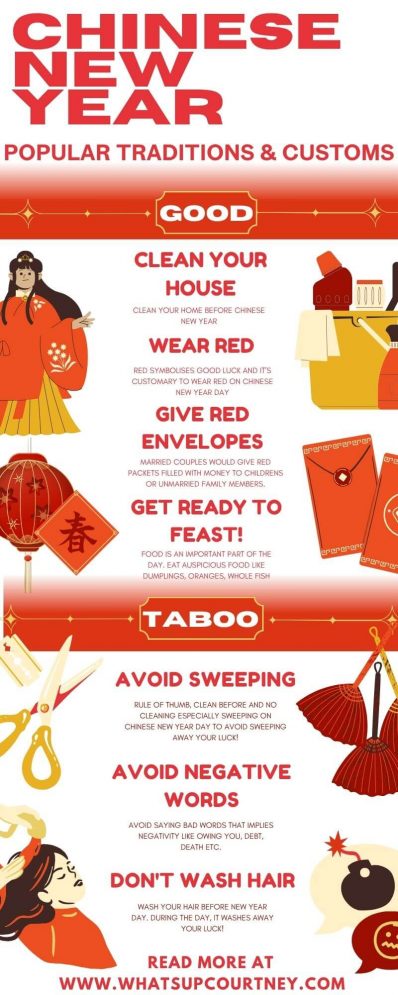
2. The Colour Red
To the Chinese, the colour red represents good fortune, joy, and prosperity and during Chinese New Year (the day itself), everyone will be wearing new clothes and predominantly in shades of red. You will also see
- Red decorations hang from every doorway, window, and lamppost
- Everyone wears new red clothing on New Year’s Day for good luck
- Red couplets (春联, chunlian) with lucky phrases and poems are pasted on doorways
- Red lanterns light up streets and homes
You’ll notice on the day itself, everyone who celebrates will be wearing new clothes in shades of red.
Red Envelopes (Hongbao 红包)
As I mentioned before, this was my absolute favourite tradition as a child. Red envelopes filled with money are traditionally given to children by married couples, older relatives generally married but they can give anyway or from employers to employees.
The red envelope itself is supposed to ward off evil spirits and transfer good fortune to the recipient. But let’s be honest, as a kid I just knew it meant MONEY.
Important hongbao rules:
- The sum is typically an even number
- Never give the number 4 (it sounds like “death” in Chinese)
- Never give coins, only bills
- The red envelope should be new and crisp
- Give and receive with both hands as a sign of respect
These days, you can also send digital red envelopes through WeChat or Alipay in China. It’s the same tradition, just modernized. People send them in group chats, and there’s this whole competitive thing where the amounts are hidden and everyone rushes to grab them. It’s actually pretty fun to watch.
3. Spring Cleaning (But Not During!)
In the week leading up to Chinese New Year, families do a massive spring cleaning (扫尘, sǎochén literally “sweeping the dust”) to sweep away bad luck from the previous year and make room for incoming good fortune.
My mum would go HARD on spring cleaning. We’re talking cleaning behind the fridge, washing curtains, scrubbing everything with a toothbrush level of intense.
But here’s the critical part: once New Year arrives, you absolutely cannot clean or sweep for the first few days (I’ll explain why in the taboos section). So everything has to be spotless beforehand because you’re not allowed to clean once the celebration starts.
4. Fireworks
Fireworks are used to drive away the evil in China. Right after midnight on Chinese New Year’s Eve, fireworks are launched to celebrate the coming of the New Year as well as to drive away the evil. And who doesn’t like a bit of fireworks on a celebratory night but also be mindful of your pets and others.
The tradition comes from an ancient legend about a monster called “Nian” (年 which is also the word for “year”). The legend says Nian was afraid of loud noises and the colour red, so people would set off firecrackers and decorate in red to scare it away.
(Note: Many cities in China have banned or restricted fireworks in recent years due to safety and pollution concerns, but it’s still widely practiced in smaller cities and rural areas.)
5. Lucky Foods
There are certain foods that are eaten during Chinese New Year, and each one has a symbolic meaning. The key is that many of these foods sound like auspicious words in Chinese, so eating them is believed to bring that luck into your life.
Fish (鱼, yú) is the most important. Fish sounds like “surplus” in Mandarin, so eating fish will bring prosperity and good luck in the coming year. Traditionally, some fish should be left uneaten to represent having a surplus year after year.
Dumplings (饺子, jiǎozi) are shaped like ancient Chinese gold ingots, so they represent wealth. I remember as a child, we used to have dumplings on New Year’s Eve, and some families hide a coin in one dumpling and whoever gets it will have extra good luck. (My brother almost choked on the coin once, so modern families use candy or peanuts instead!)
Noodles (面条, miàntiáo) represent long life. You’re supposed to eat them without cutting or breaking them, which is way harder than it sounds.
Oranges and tangerines are eaten and displayed around the house because they’re particularly round and “golden” in colour, symbolising fullness and wealth. Plus, the Chinese words for these fruits sound like “gold” and “good luck.”
Nian Gao (年糕) or rice cake, the name sounds like “year higher,” symbolising growth and progress.
Spring rolls are shaped like gold bars and represent wealth.
Basically, if it sounds like a word for money, prosperity, or longevity in Chinese, we’ll eat it during New Year!
6. Reunion dinners on Chinese New Year Eve
Another common tradition is for families and friends to gather and have reunion dinners on the eve of Chinese New Year. Most times they will enjoy a hearty steamboat or hot pot feast at the centre of it all. Also a whole fish, to symbolise abundance.
But first, in some cultures like Singapore and/or Malaysia, they will have a salad where the components are placed strategically on a big plate seperately to one another. Then everyone would gather around with chopsticks and starts tossing of yusheng (also known as lo hei) while exclaiming prosperous wishes for the new year.
It is believed that the higher the salad is tossed, the more abundance and auspiciousness you bring to your life and those around you. So, toss high and get the table messy and shout loud. It was one of the best experiences I had with my friends.
Alternatively, a restaurant is always a good shout to gather with your family and friends but be sure to book early.
7. Praying in a Temple on Chinese New Years day
Going to the temple to pray during the festivity is almost a must, to thank the Gods for their protection and good health. It is also considered to be a particularly blessed activity which will lead to good fortune and a smooth year ahead.
Going to the temple to pray during the festivity is almost a must for many families and this is to thank the Gods for their protection and good health from the previous year. It’s also considered a particularly blessed activity which will lead to good fortune and a smooth year ahead.
I remember going with my grandparents as a kid and barely being able to move through the crowds because everyone had the same idea. The temples get absolutely packed on New Year’s Day.
Offerings typically include incense, fruit, and food. People pray for health, prosperity, good luck in business, success in exams, finding love, basically all the important life stuff.
8. Lion and Dragon Dances
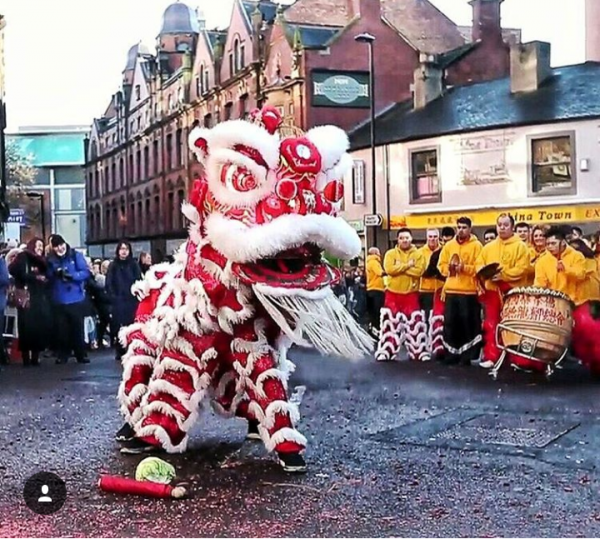
You’ll see lion dances and dragon dances performed in the streets, at malls, and at community centres during Chinese New Year.
Lion dance involves two performers in a colorful lion costume doing acrobatic moves. The lion “eats” lettuce hung above doorways (which contains a red envelope with money), symbolizing the eating of good fortune.
Dragon dance features a long dragon puppet carried by multiple performers, representing power, prosperity, and good fortune.
These aren’t just performances, they’re believed to bring actual good luck to businesses and communities, which is why you’ll see them at restaurant openings and shop launches throughout the year too.
Chinese New Year Superstitions and Taboos
These are the basic list of things which the Chinese try not to do during this time as they see it as bad luck. Though understandably that nowadays there might be some who don’t believe in it but it is still practiced.
I’ll be honest, some of these are so specific that I still don’t fully understand the logic. But my mum was hardcore about these growing up, and I know loads of Chinese people who genuinely follow these rules. Though nowadays, there are some who don’t believe in it, but many still practice these traditions just to be safe.
1. Washing Hair
Hair must not be washed on the first day of the lunar year.
Why? In the Chinese language, the word for hair (发, fà) has the same pronunciation and character as ‘fa’ in facai (发财, fācái), which means ‘to become wealthy’. Therefore, if you wash your hair, it is seen as “washing one’s fortune away” at the beginning of the year.
My mum would literally not let me shower with wet hair on New Year’s Day. And I still do this every year.
2. Laundry
Why? These two days are celebrated as the birthday of Shuishen (Water God), so using water for cleaning is considered disrespectful.
Honestly, this is a pretty good excuse to be lazy for two days, so I’m not complaining!
3. Sweeping/Cleaning
This is important: if you sweep with a broom on New Year’s Day, it is seen or means that your wealth will be swept away too. The same goes for mopping, vacuuming, or taking out the trash/rubbish.
Why? Any rubbish in your house on New Year’s Day is considered accumulated wealth and good fortune, so throwing it out means throwing away your money and luck.
This is exactly why the intense spring cleaning happens in the week BEFORE Chinese New Year. You have to get your house spotless beforehand because once the new year hits, you’re banned from cleaning for a few days.
4. Debt
Money should not be lent on New Year’s Day, and all debts have to be paid by New Year’s Eve.
Why? Lending money on New Year means you’ll be lending money all year long. Borrowing money means you’ll be in debt all year. And if you collect debts on New Year’s Day, it’s said you’ll be unlucky all year.
If someone owes you money, don’t go to their home to demand it on New Year’s Day. Anyone who does so is said to be unlucky for the entire year.
5. Colour of clothes
Try to avoid wearing white or black clothes during Chinese New Year.
Why? These two colours are traditionally associated with mourning and funerals in Chinese culture.
Stick to red, gold, pink, orange, and other bright, cheerful colours. This is why everyone looks like walking red packets during the celebrations.
6. Breaking Things
Try not to break dishes, glasses, or anything on New Year’s Day.
Why? Breaking things symbolizes breaking your family connections and destroying your luck for the year.
If you DO accidentally break something, you must immediately say “岁岁平安” (suì suì píng’ān), which means “peace year after year.” The word for “break” (碎, suì) sounds like “year” (岁, suì), so you’re turning the accident into a blessing.
My grandma once dropped a plate on New Year’s Day and IMMEDIATELY shouted this phrase before the plate even hit the ground. That’s how seriously people take this.
7. Sharp Objects
Avoid using knives, scissors, or any sharp objects on New Year’s Day.
Why? Using sharp objects is believed to cut off your good fortune and prosperity.
All food that needs cutting should be prepared the day before. If you absolutely must use a knife, some families wrap the handle in red paper first to neutralize the bad luck.
8. Crying or Fighting
Try to avoid crying, arguing, or getting into conflicts on New Year’s Day.
Why? How you spend New Year’s Day supposedly sets the tone for the entire year. Crying means you’ll have a sad year. Fighting means you’ll have conflict all year.
So even if someone annoys you, you’re supposed to smile, be patient, and keep the peace. This is genuinely harder than it sounds when you have extended family crowded into one house for days.
9. Saying Negative Words
Avoid saying words like “death,” “sick,” “poor,” “broken,” “ghost,” “unlucky,” or anything negative.
Why? Your words have power during Chinese New Year, and negative words invite negative energy for the coming year.
You have to genuinely catch yourself mid-sentence sometimes. Like if you’re about to say “I’m dead tired,” you’d better rephrase that real quick.
Chinese New Year traditions on Gift Giving
Gift giving is common during Chinese New Year, but there are definitely some gifts you should NEVER give:
Clocks (钟, zhōng) : In Chinese, giving a clock sounds like “attending a funeral.” It’s basically like wishing someone death. This is a BIG no-no.
Scissors or knives : Symbolizes cutting off the relationship or severing ties.
Umbrellas (伞, sǎn) : The word sounds like “separate” (散, sàn), suggesting the relationship will break apart.
Handkerchiefs : Associated with saying goodbye forever, often used at funerals.
Shoes : Implies the person will walk away from you.
Anything in sets of four : The number 4 (四, sì) sounds like “death” (死, sǐ) in Chinese, making it the unluckiest number.
Safe gift options:
- Fruit baskets (especially oranges and tangerines)
- Tea
- Traditional snacks and treats
- Alcohol (cognac is weirdly popular)
- Red envelopes with money (always appropriate!)
Basically, if you’re not sure, just ask a Chinese friend or stick with fruit!
There are loads more, and everyone has their own tradition of what they do during this auspicious time.
Also if you are single, you might get questioned by your relatives regarding your love status, which is not surprising that in China, they have a rent a boyfriend/girlfriend service to get their family off their backs!
Regardless of what they are, the main thing is to be happy and enjoy spending time with your loved ones and/or have lots of delicious food!
Your Chinese Horoscope & the Year of the Horse 2026
As you may or may not know, there are 12 zodiacs in the Chinese calendar: Rat, Ox, Tiger, Rabbit, Dragon, Snake, Horse, Goat, Monkey, Rooster, Dog, and Pig.
Within each zodiac, there are elements of fire, wood, water, metal, and earth, and it depends on the year which you are born. 2026 is the Fire Horse year, which brings energy, passion, and enthusiasm.
If you’re a Horse (born 1942, 1954, 1966, 1978, 1990, 2002, 2014, 2026): 2026 is your “benmingnian” or zodiac year. This is traditionally considered challenging, so wear red throughout the year for protection, red underwear, red socks, red bracelet, anything red!
Want to know your Chinese zodiac sign and what 2026 predictions are? Find your birth year in the list and see what fortunes may hold for you this year. Just remember, Chinese New Year marks the zodiac change, so if you were born in January or early February, check whether your birth date falls before or after that year’s Chinese New Year!
Also if you are in Newcastle Upon Tyne during the New Year, there are so many places to do and visit in Newcastle Upon Tyne to celebrate Chinese New Year.
Experiencing Chinese New Year If You’re Not Chinese
If you’re not Chinese but want to experience or celebrate Chinese New Year, here’s how:
Attend local celebrations : Most major cities with Chinese communities host parades, festivals, and events. Look for lion dances, lantern displays, food stalls, and cultural performances.
Visit Chinatown : Chinatowns around the world go ALL OUT for Chinese New Year with red decorations, special restaurant menus, and festivities.
Learn the greeting : Even just saying “Gong Xi Fa Cai” will make Chinese people smile and appreciate the effort.
Wear red : Join in the tradition! Red clothing is always appropriate during Chinese New Year.
Try lucky foods : Order dumplings, noodles, fish, or visit a Chinese restaurant for a special New Year menu.
Respect the customs : If invited to a Chinese family’s celebration, follow their lead on traditions and be mindful of the taboos.
Bring an appropriate gift : Fruit baskets with oranges are always safe. Avoid clocks, scissors, or anything with the number 4.
FAQs About Chinese New Year Traditions 2026
When is Chinese New Year 2026?
Tuesday, February 17, 2026. It’s the Year of the Horse, and celebrations run for 15 days until the Lantern Festival on March 3, 2026.
What does “Gong Xi Fa Cai” mean?
It means “Congratulations and be prosperous.” “Gong Xi” means congratulations, and “Fa Cai” means to become wealthy. It’s the traditional Chinese New Year greeting.
Why can’t you wash your hair on Chinese New Year?
“Hair” in Chinese (发, fà) has the same character as “wealth” (发财, fācái). Washing your hair is seen as washing away your fortune and good luck for the coming year.
What’s inside red envelopes (hongbao) that’s given out during Chinese New Year?
Money! Red envelopes are traditionally given by married couples or older relatives to unmarried people and children. The amount is always an even number and never includes the number 4 (which sounds like “death”). Although I say unmarried people, I’m not overly sure what the cut off age is if any.
What gifts should you NOT give during Chinese New Year?
Never give clocks (sounds like “attending a funeral”), scissors or knives (cutting relationships), umbrellas (sounds like “separate”), shoes (person will leave), or anything with the number 4. Fruit baskets are always safe!
Why is fish eaten during Chinese New Year?
“Fish” (鱼, yú) sounds like “surplus” (余, yú) in Mandarin, so eating fish symbolizes having abundance and prosperity in the coming year. Some fish should be left uneaten to represent surplus year after year.
What is the Year of the Horse personality?
People born in Horse years are energetic, enthusiastic, independent, optimistic, and success-driven. 2026 is the Fire Horse year, bringing even more passion and energy.
How long does Chinese New Year last?
Officially 15 days, from New Year’s Eve to the Lantern Festival. However, the main celebrations happen in the first week, and many people get a week-long holiday.
Final Thoughts
There are loads more traditions and customs, and honestly, every family has their own version of what they do during this auspicious time. Some families are super strict about the taboos, others are more relaxed. Some do elaborate multi-day celebrations, others keep it simple.
Also if you’re single, there is a huge possibility you’ll get questioned by relatives about your love status. This is so common that in China, they literally have a rent-a-boyfriend/girlfriend service to get family off their backs. No judgment, Chinese New Year family interrogations are no joke!
But regardless of how you celebrate or which traditions you follow, the main thing is to be happy and enjoy spending time with your loved ones. And of course, eat lots of delicious food!
Whether you’re Chinese, part-Chinese like me, or just curious about the culture, I hope this guide helps you understand what Chinese New Year is all about. It’s chaotic, it’s superstitious, it’s full of rules that don’t always make sense, but it’s also warm, joyful, and centered around the people you love.
Gong Xi Fa Cai! 恭喜发财! May the coming Year of the Horse bring you energy, success, and prosperity! 🧧🐴
Courtney xx
Visit my other travel destinations on WhatsupCourtney below:
4 Days in Kyoto Itinerary: Complete First-Timer’s Guide
8 REASONS WHY YOU SHOULD STAY AT CANDEO HOTELS ROPPONGI TOKYO
10 GREAT THINGS YOU MUST DO AND EAT AT ROPPONGI TOKYO
10 Must-Know Japan Travel Tips for First-Time Visitors (2025)
HOTEL REVIEW: CANDEO HOTELS SHIMBASHI TOKYO WITH SKY SPA

WhatsupCourtney
Owner / Traveller / Content Creator
Hey! I’m Courtney, traveller and content creator behind the travel and food blog WhatsupCourtney. I’ve spent over 10 years exploring travel destinations across Asia, Europe and beyond with a particular focus on cultural experiences, adventures and their food. Instead of the traditional curated Instagram style blogging, I am trying instead, to show you the realistic, raw, and exotic side of travel and a whole lots of food that goes with it. Because I believe food is part of the country culture and needs to be tried and shown proudly.
I have recently traveled around Shanghai China, day trips to Dubai and Paris, explored the Golden Route in Japan, and as you know I was born and raised in Jakarta Indonesia so will be providing lots of Indonesian travel tips and Newcastle Upon Tyne UK travel guides as a local.
PIN me for later:

I found this post very interesting. I’m a Dragon according to the Chinese horoscope. I didn’t know about the scissor and clock thing. Now I know.
1st of all Gong Xi Fa Cai. Such an interested post and I’ll be honest, I have 0 clue about chinese new year and how they celebrate but I loved every bit. It is always an amazing feeling to learn about new cultures and traditions of a different country.
Ps: Who doesn’t love getting money as a present!
Thank you! Gong Xi Fa Cai to you too! aw I’m glad I am able to introduce you to the traditions. There are loads more but these are the main ones. They are all mainly about bringing good luck for the rest of the year! haha true! money is the best present, especially as a child.