
Is this your first time in Shanghai? Or you are planning a future trip to Shanghai?
I didn’t know what to expect in Shanghai but it was so much better. I went for my best friend’s birthday, she has just moved there for work, and it was one of the best week I spent traveling.
I also happened to go during the Mid-Autumn Festival public holidays, which meant the city was packed and super crowded, and I mean so many people both local tourists and international tourists. It was the golden week, and the locals don’t have a lot of holidays and they take this national holiday as well as Chinese New Year seriously.
Funnily enough, I am writing this Shanghai guide whilst planning for my Beijing Trip.
If you’re heading to Shanghai for the first time, this is everything I wish someone had told me before I landed. The visa, how to actually pay for things, which apps you should definitely download, where to stay, how to get around, and what surprised me.
In a Rush, here’s my top hotel picks in Shanghai
⭐⭐⭐⭐⭐ The Langham Shanghai Xintiandi, luxury hotel near trendy restaurants, boutiques, and the metro.
⭐⭐⭐⭐ Grand Hyatt Shanghai, located in Jinmao Tower in Pudong with views that are something else.
⭐⭐⭐⭐ The Eton Hotel, great value in central Pudong, spa and pool included. One of those places where the price doesn’t match how good it actually is.
⭐⭐⭐⭐⭐ The St. Regis on the Bund, the most luxurious option on this list. The Pudong skyline views from the upper floors are extraordinary.
⭐⭐⭐ Campanile Shanghai Bund Hotel, This is a great hotel for the price and location near Yu Garden.
Hotel sites I used: Booking.com | Trip.com
Note: Most of these I used Booking.com which is what I used to book in Beijing and Xi’an.
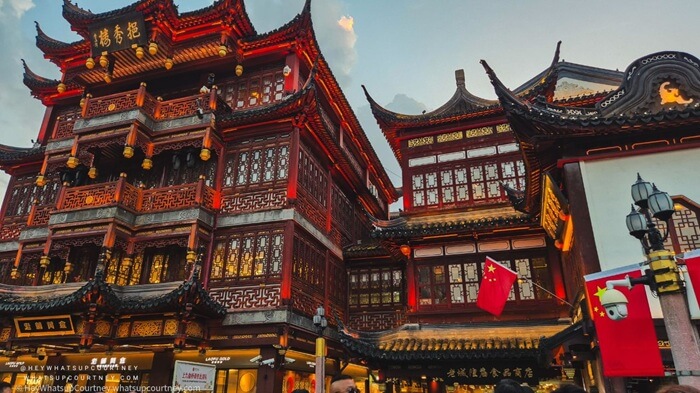
Is Shanghai Easy for First-Time Visitors?
Yes, more than most people expect.
The main things that I notice that scares people when arriving in China are the payment system and the app setup, both of which are completely manageable if you sort them before you fly.
Their metro system is excellent, the city is very safe, and once you have translation apps working, the language barrier is much less of a problem, and quite a number of people especially the younger ones can speak some English or they will use the translation app readily.
I cannot stress enough that you have to make sure you set everything up at home, give yourself a minimum of a week before departure to make sure Alipay and WeChat are verified and working, and you’ll land in Shanghai feeling prepared rather than freaking out.
and if you are visiting during Chinese New Year, I have a guide on what you can do during this time and learn more on the customs and traditions.
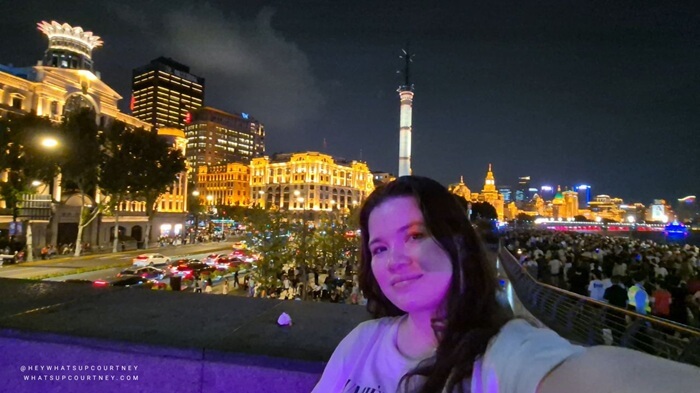
China Visa for First-Time Visitors in 2026
The Visa rules for China has changed significantly in 2026, and to be fair, the rules can change all the time so it is best if you check the the official Chinese embassy website or the Chinese National Immigration Administration before booking in your country for the latest information.
However, the following are based on information from May 2026, and some I am super excited about as it changed for the UK citizens this year.
UK citizens: Visa-free entry for up to 30 days from 17 February 2026, valid until 31 December 2026. Covers tourism, business, and family visits.
US citizens: Visa-free entry for up to 30 days as of November 2025, valid until 31 December 2026.
Many other European passport holders: China currently offers 30-day visa-free access to around 50 countries. Check whether yours is included.
If your country isn’t on the list, you’ll need to apply for a tourist visa in advance. Standard processing can take four to five working days but always allow at least a month to be safe, especially from the UK.
There’s also the TWOC visa which is the 10 day transit visa that most countries can benefit from. It can be quite complex with how it works. And this was the visa I used when I visited Shanghai in October 2025.
If you are looking for an Esim with VPN, Airalo is a good one to have
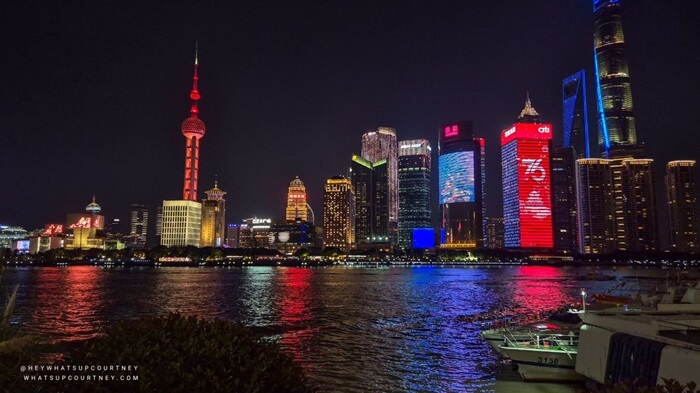
TWOC Visa
As you know, this is a 10 day transit visa China introduced to some countries.
How TWOC works is you need to arrive from Country A to China, then the visa starts when you land, and then you have to leave to Country B from China, a different destination.
So if you took KLM from London to Shanghai, your country A would be Amsterdam because KLM would normally stopover in Amsterdam before flying to Shanghai. Then your onward journey after 10 days in Shanghai could be Hong Kong (yes it’s considered a 3rd country in this aspect), or other asian countries like Japan, Korea, Singapore.
Note on registration: If you’re staying in a hotel, the hotel registers your stay with the local authorities automatically.
If you’re staying with a friend, in an Airbnb, or any private accommodation, you are legally required to register yourself within 24 hours of arrival.
This is done online via the Shanghai Public Security Bureau’s self-service system and takes about 15 minutes with your passport details and accommodation address. I learned this the hard way. Read the full story in my where to stay in Shanghai guide.
When to Visit Shanghai
Timing can be very important with your first trip to Shanghai because I know from experience how it can affect your trip regardless if it’s your first time or seasoned traveller.
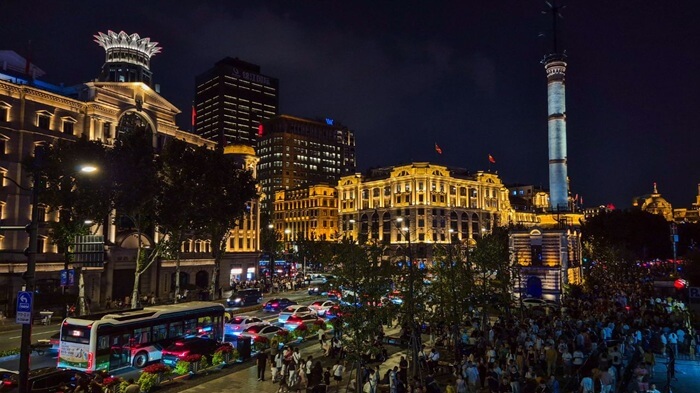
Weather, season and of course the national holidays plays a huge part in coming to Shanghai. Also Shanghai is humid, more humid than the other cities. I thought it would be have been cooler in October, nope I was wrong, it was so hot and tshirt weather but it was great, didn’t particularly rain though bit cloudy at times,
Spring, March to May is one of the best times. Temperatures climb from around 10°C in March to 25°C in May, cherry blossoms come out in early April, and the weather is comfortable for full days of walking.
Summer, June to August can get very hot and humid. Consistently 30 to 35°C with high humidity. Late June brings the rain season with daily rainfall for a couple of weeks.
Autumn, September to November is my recommendation. I was there in October and the temperature was perfect for walking all day. Clear skies, lower humidity, golden leaves along the French Concession streets.
One thing to plan around: the first week of October is National Day Golden Week. The whole country is on holiday and major attractions get very crowded. If you can, visit from mid-October and you get the same weather with significantly fewer people.
Winter, December to February is cold and damp. Buildings don’t always have central heating. Cheapest time to visit, and Chinese New Year in late January or February is worth seeing if festivals are your thing.
My recommendation is October or April to May. Avoid the first week of October and the Chinese New Year period unless the festival atmosphere is specifically what you’re coming for.
If you are visiting Shanghai Disneyland Resort, you can get your Disneyland tickets in advance here via Trip.com
How to get to Shanghai
From Pudong International Airport (PVG)
Most international flights land at Pudong, about 30km from the city centre, and this was the airport I landed in, the one you seen videos with over 100s of gates, and yes it is a huge airport.
To get into the city, you can take The Maglev train. It’s the world’s fastest commercial train, reaches 431km/h, and covers the 30km from the airport to Longyang Road Station in seven minutes.
I had to take it when I arrived, my mum was very insistent that I take it and I can understand why. Watching the speedometer climb past 400km/h on what felt like a perfectly smooth ride was insane, it was similar to the experience in riding the bullet train in Japan.
From Longyang Road, you can transfer to the metro to reach your hotel, so the full journey is around 45 minutes total. It costs ¥50 one way, or ¥40 if you show your same-day flight ticket at the counter. You can book tickets via Trip.com
If you’re on a budget, Metro Line 2 runs directly from the airport to the city centre for ¥7 to ¥10. It takes 75 to 90 minutes and involves navigating the transfers.
Taxis and DiDi (China’s equivalent of Uber) which you can access via Alipay or the Didi app itself, and it cost around ¥150 to ¥200 to the city centre and take 45 to 60 minutes depending on traffic.
Convenient if you have a lot of luggage, but pricier. Download DiDi and definitely Alipay before you leave home and set up your payment method in advance.
From Hongqiao Airport (SHA)
Hongqiao is mostly domestic flights and is closer to the city, about 13km out. Metro Lines 2 and 10 run directly from the airport. Journey time to downtown is around 30 to 40 minutes and costs ¥3 to ¥7.
By High-Speed Train
Shanghai has two main train stations, the Shanghai Hongqiao Railway Station and Shanghai Railway Station, and both are connected to the metro. High-speed trains connect Shanghai to Beijing in 4.5 hours, Hangzhou in one hour, and Suzhou in 25 minutes. Book tickets through Trip.com.
How to get around Shanghai
The metro is your best friend in this city. Shanghai’s system has 20 lines, covers essentially everywhere you need to go, runs from around 5:30am to 11pm, and costs ¥3 to ¥10 per journey.
Trains run every three to five minutes during peak hours and stations are signed in both Chinese and English. I used it constantly and never had an issue.
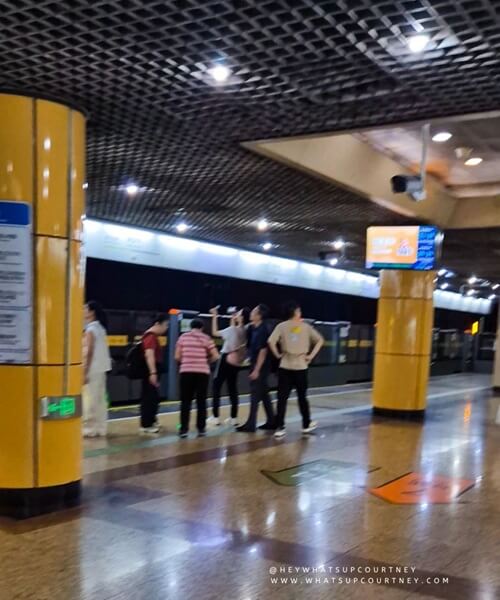
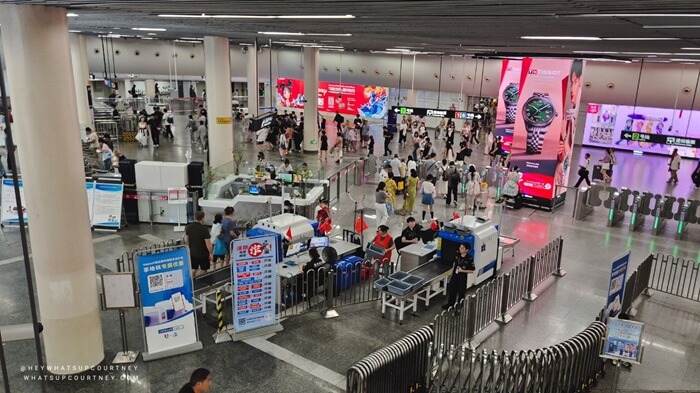
One thing to know and don’t worry about it too much, is that every metro station has security screening at the entrance.
Your bags go through an X-ray scanner before you tap through the turnstiles, including your takeaway food bag. It takes about 30 seconds and is very efficient, but factor it in when you’re timing your journeys.
Download the Metro Dada app for real-time schedules and route planning in English. It’s so helpful.
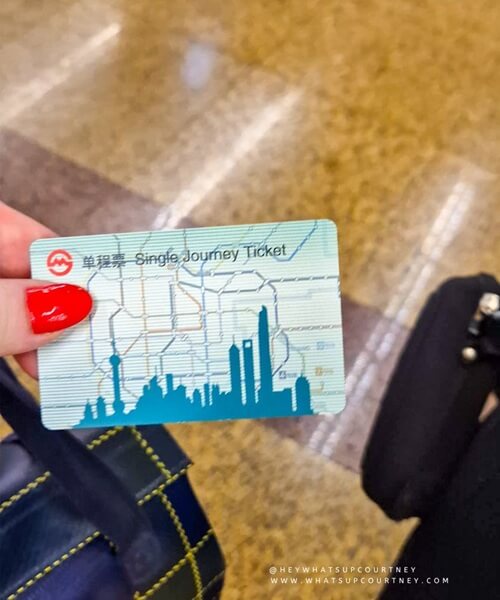
Oh and you have to insert the physical ticket into the machine to get in or out, and don’t be an idiot like me where I put it in a red slot. It has to be green to work.
DiDi works well across the city and is slightly cheaper than official taxis. Please make sure to set it up before you arrive. Their taxis are metered and affordable especially if you are from the USD, Euro or GBP currency, but most drivers don’t speak English so have your destination saved in Chinese characters on your phone.
Taxi DiDi Tip: And make sure you know your 4 digit pin, the drivers might shout it out at you or you can learn the numbers in mandarin or put it on your phone and show it to them.
You can rent shared bikes from Mobike or HelloBike are also everywhere, great for short distances around the French Concession, and cost about ¥1 to ¥2 per 30 minutes via Alipay.
How to pay for Things in Shanghai
Shanghai is essentially cashless and I love it so much. About 90% of transactions happen through Alipay or WeChat Pay, including street food stalls, metro stations, taxis, and small restaurants.
Both Alipay and WeChat now accept international cards for tourists, which makes setup much easier than it used to be. Alipay has a “Tour Pass” feature specifically designed for visitors. Download both apps, link your Visa or Mastercard, and verify your account and your passport before you leave home.
Small transaction fees apply, usually around 3% for payments above 200 yuan if I am not mistaken. You can seperate the transactions to be less than the threshold, most places understand to do it if you ask.
Again, bring some Chinese yuan as a backup, around ¥500 to ¥1000, for any situations where QR codes don’t work or connectivity is patchy. It happened to me exactly once at a noodle shop where the QR code just would not load, and my friend had to step in to pay.
Also, one time I paid for something and the payment registered on my Alipay immediately but took several minutes to show up on the shop’s machine. Don’t panic, just check your phone for the confirmation notification before assuming something went wrong.
The shop assistant thought it didn’t work and tried to cancel but I showed her the notification saying it went through, just takes a long time to connect to the shops machine.
Essential Apps to Download Before You Fly
This is one of the most important things you have to do before you fly to China, and yes I keep saying it but it is that important.
Alipay: You can do almost anything with Alipay and it is one of the most used app, you can get Didi, payments, and they have English translations.
WeChat: also for payments and the main communication app in China. Many bookings and menus run through WeChat mini-programs. You will need someone who has WeChat for at least 6 months to authorise your new account (this was the case for me).
DiDi: taxis and ride-hailing in English. Much easier than trying to flag down a cab.
Amap (Gaode Maps): Download this for navigation. Google Maps doesn’t work in China without a VPN, so you need an alternative. Amap works in English and is very accurate.
Google Translate: download the Chinese language pack for offline use before you go. The camera translation feature is what you’ll use constantly: point it at a menu, sign, or label and it translates in real time. Not perfect but very good.
VPN or eSIM with built-in VPN: if you want access to Google, Gmail, WhatsApp, Instagram, or any Western platform, you need a VPN set up before you land. It won’t work once you’re in China. I used NordVPN and Astrill, I got both just incase and it worked well throughout the trip.
Alternatively, get an eSIM with built-in VPN functionality like Airalo before you depart.
Metro Dada: for metro navigation in English.
Trip.com: for booking hotels, trains, and attraction tickets. Works well in China.
Meituan : If you are getting a local sim card, you can use Meituan to get the food deliveries and on the train like you see on TikTok.
Taobao: This is the shopping app, bit like Amazon, if you fancy doing some online shopping. You can order beforehand and send the parcels to your hotel though check if your hotel is happy to do it (most do), and you can get your parcels when you arrive.
Download and set everything up at least a week before you fly. I cannot stress this enough, the installation process for Alipay and WeChat can take a while but nevertheless quick if all goes well.

What to eat in Shanghai?
The food was one of the highlights of the whole trip, and I say that having travelled a lot. Shanghai cuisine has its own identity separate from what most people outside China picture when they think of Chinese food.
Xiaolongbao, the soup dumplings, are the thing you absolutely have to eat here and you should eat them multiple times at multiple places. Pick one up gently with chopsticks (or scoop it up with a spoon carefully), place it in your spoon, bite a tiny hole in the top, sip the hot soup out carefully, then pop the dumpling in your mouth.
Or if you’re like me, just pop the whole thing in your mouth in two bites, just be careful as the soup inside is super hot. Jia Jia Tang Bao near Yu Garden is the local favourite and it’s so worth the 30 to 45-minute queue.
Yang’s Fry-Dumplings does the pan-fried version, shengjianbao, with a crispy bottom and a fluffy dough that’s similar but different and equally good, so so good.
If you’re visiting between September and November, try the hairy crab. It’s a seasonal delicacy from nearby Yangcheng Lake, small but packed with flavourful roe, and you’ll see it on menus and in dumpling fillings everywhere during that time.
Red-braised pork belly, scallion oil noodles, and the street food on Yunnan Road are all worth your time and incredibly affordable. The bakeries are also exceptional and I wasn’t expecting that at all.
AMAM Lonbakery Town, a ‘London-born chain’ with multiple Shanghai locations, does egg tarts and croissants that I still think about. Pain Chaud is another great spot for French-style pastries. Don’t walk past a bakery window without looking.
I’m putting together a full Shanghai food guide separately, so check that out for specific restaurant recommendations.
How to Navigate the Language Barrier in Shanghai on your first time to Shanghai
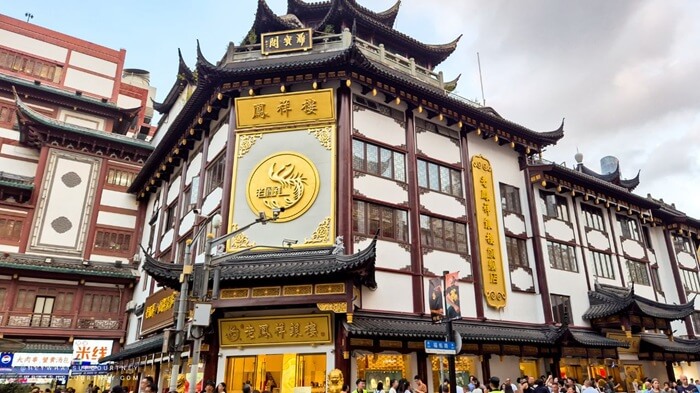
English is not widely spoken outside of tourist areas and high-end hotels. Menus are often Chinese-only and most people you encounter in markets, smaller restaurants, and local shops won’t speak much English but some may surprise you.
This sounds more intimidating than it is. The Google Translate camera feature handles menus and signs remarkably well.
Many restaurants have picture menus. Alipay has a floating translator built into the app. And people in Shanghai are patient and helpful with tourists.
More than once, a local pulled out their own phone to use a translation app to help me. Younger people working in shops and cafes, trendy or high end shops, usually speak some or good English.
The phrases worth learning: nǐ hǎo for hello, xiè xiè for thank you, and duō shǎo qián for how much. People appreciate the effort. Or do what I do and show them a picture of what you want or happened, and they’ll understand.
Cultural Tips Worth Knowing
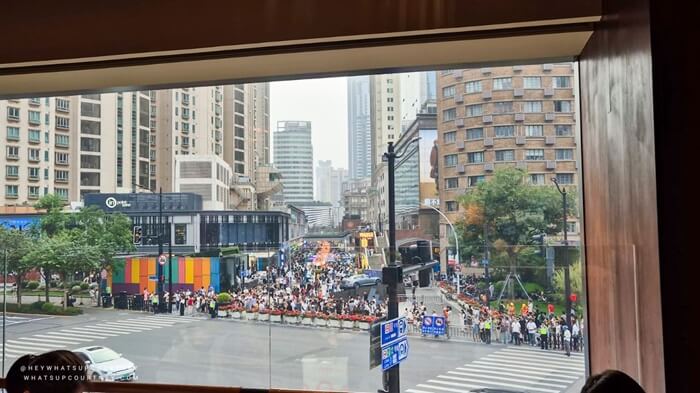
Queuing works differently here. People push more than you’re probably used to, particularly in crowded spots like metro stations during rush hour. Don’t take it personally, it’s just how it works.
At public toilets, there’s a queue to get in but once you’re inside by the stalls it’s a free-for-all. First stall you see, you take. I learnt this the extremely hard way at Yu Garden.
Tipping is not expected. Chinese culture doesn’t have a tipping tradition. The price you see is the price you pay which is greatly appreciated.
Taking photos is generally fine across most of Shanghai. Some museums and temples restrict photography in specific areas but it’s usually signed clearly.
Haggling applies at markets, not in shops and malls. Wet markets and souvenir stalls expect you to negotiate. Regular stores have fixed prices.
Smoking is more common than in Western countries. Laws are stricter than they used to be but you’ll still encounter it in some spaces.
Public toilets vary. Bring a small pack of tissues in your bag at all times because many don’t provide paper. Squat toilets still appear in older areas and markets.
If you’re non-Asian in appearance, people may stare and occasionally ask for photos. My friend got this a lot. It’s curiosity rather than anything negative. Go with it and pretend you are a celebrity.
What’s the safety like in Shanghai?
Shanghai is one of the safest major cities in Asia. I walked through the French Concession late at night after dinner, wandered through markets alone and sometimes with my friends, took the metro during rush hour, and never once felt uncomfortable.
The things to be aware of are standard for any tourist-heavy city. Keep an eye on your belongings in very crowded spots like Nanjing Road and the Bund.
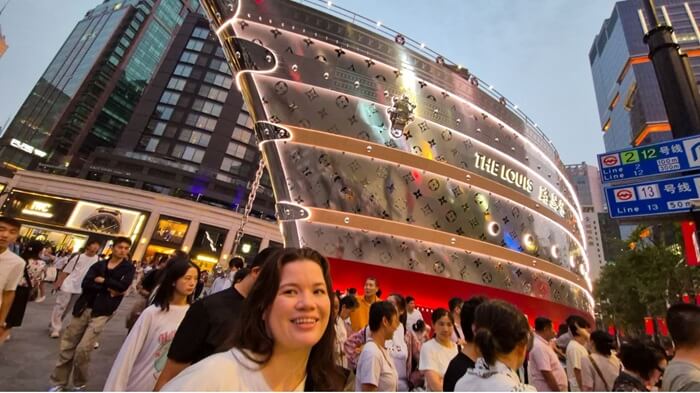
If you are non East Asian passing, you may get stares and people asking for pictures especially around the Louis Vuitton ship or popular attractions or even around the streets, but it’s more of curiousity and appreciating, I guess pretend you are a celebrity? Also just check the vibe and how they act, mostly are harmless.
The tea house scam near People’s Square and East Nanjing Road is the most common one, so someone might come and strike up conversation with you, invites you for tea, and you end up with an enormous bill. Always best to politely decline and walk away.
Also sometimes unofficial airport taxis can overcharge, so stick to official taxi lines or DiDi (it’s always the cheapest that I was told).
Emergency numbers: Police 110, Ambulance 120, Fire 119.
What to pack for your first time in Shanghai?
Comfortable shoes are non-negotiable. I consistently hit 20,000 steps a day, sometimes more. Wear shoes that are already broken in.
China uses Type A, C, and I plugs at 220V so bring a universal adapter or pick one up when you arrive.
Pack according to the season. October felt like a sauna when I arrived from the UK and then gradually cooled towards the end of the month. Even if the forecast looks mild, a light layer is always useful. Always be like an onion unless you are visiting in peak summer or winter.
A portable charger is essential. You’ll use your phone constantly for payments, navigation, translation, and photos and a dead battery in Shanghai is a inconvenience. Remember the CCC and under 100 volts on the battery bank, otherwise the immigration might conviscated it, which they did with mine as I left Shanghai.
There are plenty of battery bank rentals around, similar to the scooter or bike rental. You pay and take one from one area, and you can put it back at another stand. If your phone is super low in battery, they normally have a cable on the outside to charge it quickly in order for you to pay. Though you might need a local sim number.
How Much Does Shanghai Cost?
Shanghai is surprisingly affordable for a city it’s size, especially compared to Tokyo, London, or New York. When you convert to pounds, dollars, or euros, the food and transport costs in particular feel almost unbelievably cheap.
A rough daily guide per person:
On a budget, staying in a hostel or cheaper hotel and eating mostly street food and local restaurants, you’re looking at around ¥300 to ¥500 a day (roughly £30 to £55 or $42 to $70).
Mid-range, with a three to four-star hotel, a mix of local and nicer restaurants, mostly metro with the occasional DiDi, and paid attractions, expect around ¥800 to ¥1500 a day (roughly £85 to £165 or $112 to $210).
I was in the mid-range bracket and averaged around ¥1200 a day including accommodation, food, transport, and activities. For a major city, it felt like excellent value.
To give you a sense of specific costs: street food runs ¥10 to ¥30 per dish, a local restaurant meal is ¥30 to ¥80, metro rides are ¥3 to ¥10, and entry to most attractions is between free and ¥180 for something like Shanghai Tower.
Things to Do in Shanghai
I’ve covered all of this in detail in my full things to do in Shanghai guide, but the ones you absolutely cannot miss are the Bund at night, the French Concession for a full afternoon, Yu Garden and the surrounding bazaar, and eat xiaolongbao (Shanghai is famous for this).
For tours and experiences, I have used Trip.com, and Viator and they have good options for guided walks, food tours, and day trips out of the city.
Experiencing Shanghai During the Mid-Autumn Festival
Since I visited during the festival, it’s worth saying a bit about what that’s actually like.
Mid-Autumn Festival is one of China’s most important holidays, celebrating the harvest and family reunion. It falls on the 15th day of the eighth lunar month, usually late September or early October. In 2025 it fell on October 6, with celebrations stretching across the week.
On the night of the festival itself I walked through Fuxing Park in the French Concession and watched families sitting on blankets under the full moon, eating mooncakes and drinking tea.
The flip side is the crowds, particularly because the festival overlapped with National Day Golden Week that year. Popular spots like the Bund, Yu Garden, and Nanjing Road were packed. If you visit outside of that specific overlap, you’ll still get the festival atmosphere but with more breathing room.
For me its more of an organised chaos, the police are everywhere looking after the crowds and managing them properly. I felt safer and more secure than going through a crowd of football fans leaving the stadium before the match in Newcastle, less pushing.
Final Thoughts on Visiting Shanghai for the First Time
Shanghai was one of those trips where I came back and immediately started thinking about going again. The city has an energy that’s hard to explain until you’re standing in the French Concession at 9am with a good coffee and nowhere to be for an hour.
If you’re planning a first trip to Shanghai, please get your apps sorted before you leave, set up your payments, book your accommodation in a good neighbourhood, and give yourself more than three days. After that, explore, enjoy the vibe, it’s a great mix of modernity and the old as well. The people are lovely as well, and more used to foreigners so it would be a great first trip.
Have the best time, and let me know what you think of Shanghai.
Courtney xx
Affiliate disclosure: Some links in this post are affiliate links. If you book through them I may earn a small commission at no extra cost to you. I only recommend experiences and hotels I have personally visited or thoroughly researched. Thank you!
Plan Your Shanghai Trip
My Shanghai travel guides will help you plan for your China trip:
Chinese New Year Traditions Explained: What They Mean & How to Celebrate
21 Things to Do in Shanghai in 2026 + Things you can skip and consider



Leave a Reply