
One of the main reasons I’m doing a Nara Day trip was to see the bowing deers and to see the viral Mochi pounding but more on that later.
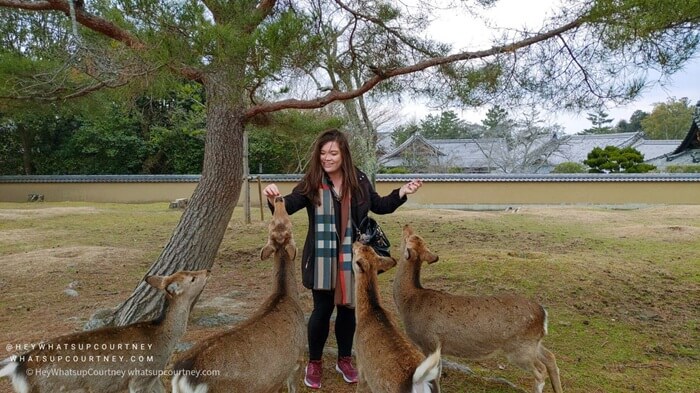
I was standing in Nara Park, surrounded by deer casually wandering around and looking for the biscuits. One comes up to me, we locked eyes, it bowed, I bowed and fed it a cracker, and kept wanting more.
Then, what feels like slow motion, another deer reaches up and starts eating my phone charging cable that’s hanging out of my bag. Just chomps on it while my partner’s taking a photo. I literally saw it in what felt like slow motion! I quickly gave it another cracker in exchange, lured it away and considered it a fair trade.
So yeah, what they say about the deers are not wrong. They are so adorable though, and incredibly greedy (some). Also please feed the older ones too.
Nara city is less than an hour from both Kyoto and Osaka, this ancient city was Japan’s first permanent capital city back in 710 AD. Today it’s famous for three things, over 1,200 cheeky deer roaming freely through the park, some of Japan’s most impressive temples with big Buddha statues, and home to eight UNESCO World Heritage sites.
Most people visit Nara as a day trip, which is exactly what I did from Kyoto. You can comfortably see all the main attractions in a day without feeling rushed. I’ve put together this guide with everything you need to know, from how to get there to what to see in your Nara day trip, and most importantly, how to protect your belongings from those greedy deers.
Just a heads up! This post may contain affiliate links, meaning I get a commission if you decide to purchase something through the links, at no additional cost to you. Your support helps me continue doing what I love and provide you with the best travel guide and tips from experience. Thank you!
Don’t have time to read yet? Grab my quick recommendations below!
Here are my top picks Hotels in Nara:
⭐️⭐️⭐️ Daiwa Roynet Hotel Nara Natural Hot Springs a modern hotel in the Nara city with a natural hot spring and looks beautiful! Modern mix with Ryokan decor.
⭐️⭐️⭐️⭐️ Tsukihitei Ryokan Tsukihitei is located in the Kasugayama Primeval Forest, a UNESCO World Heritage site. Each guest room has a Japanese-style decor and offer panoramic forest, Proper Ryokan!
⭐️⭐️⭐️⭐️ Piazza Hotel Nara is located just a minute’s walk from JR Nara Station. Modern vibes and great looking rooms
Hotels sites I trust: Booking.com and Expedia
If you are looking for different things to do in Nara, Hammer a Pattern on Your Ring Workshop or Handcrafted Nara Cedar Chopsticks Workshop is an amazing experience
Or if you want to go private: Nara 6hr Private Tour with Government-Licensed Guide
or Nara Highlight Walking Tour with Furoshiki Experience with Lunch
Get your Kintetsu Rail Pass
🗺️ Insurance: Protect yourself on your trip with Travel Medical Insurance.
📱 Connect: Always stay connected, and do so seamlessly, with a Japan eSim!
🚗 Traveling around Japan? Discover Affordable Car Rentals here!
Learn Japanese phrases before you go with a trial lesson on Preply learners
In this Nara Travel Guide:
- When to Visit Nara
- Before You Go: Essential Tips
- My Nara Day Trip Itinerary
- Getting to Nara from Kyoto
- Getting to Nara from Osaka
- How long do you really need for Nara?
- Where to Stay for Your Nara Day Trip?
- Combining Nara with Other Day Trips
- Is Nara Worth Visiting?
When to Visit Nara
The best time to arrive in Nara is early morning, ideally by 8 or 9am in my opinion. The difference between arriving early and arriving at 10am or 11am is night and day, with the sheer amount of people.
When I got there around 8:30am, it was lovely and peaceful. The park was quieter, there are vendors dotted around selling the Deer biscuits. And that’s it really, the deers knows if you have them, and they will approach you, some will chill on the side. But at least people wise, it’s not that busy.
Also one advantage is the mochi, during the morning, there are less people at the famous mochi vendor, and you can see how they pound them without the big crowds!
If you want to learn practical, travel-specific Japanese phrases or enough to get by when traveling, I find one-to-one tutoring with a native speaker useful. I have used Preply, and you can book your trial lessons on Preply.
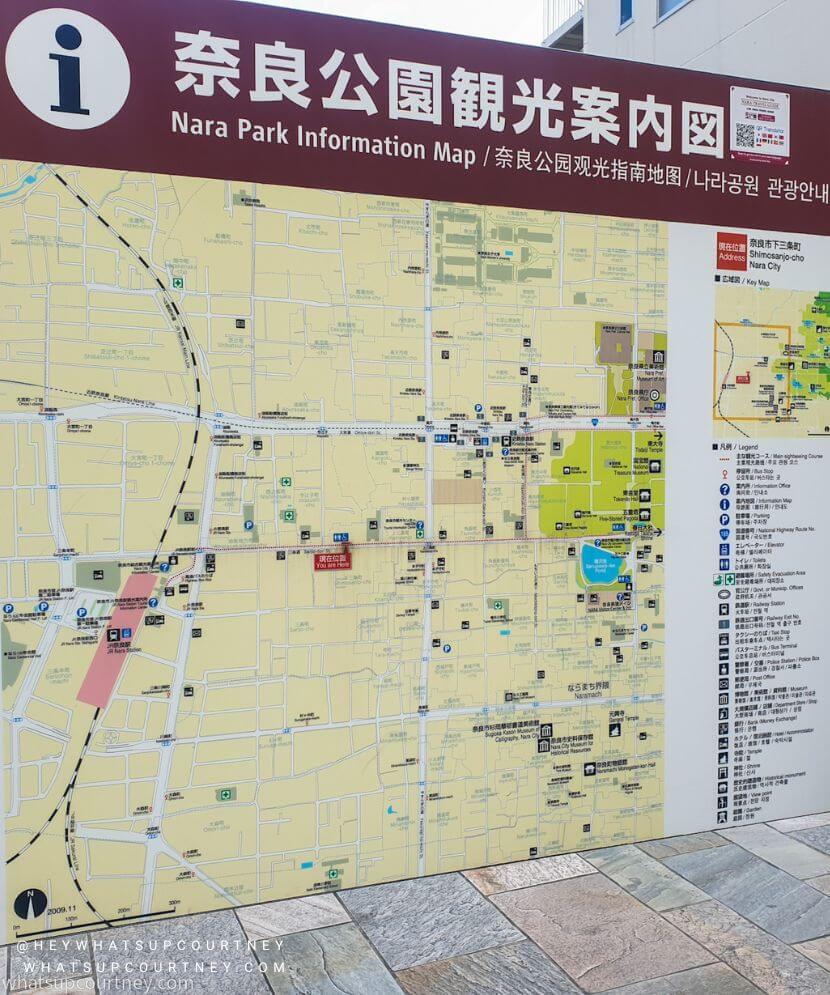
Before You Go: Essential Tips
Sort out your eSIM or pocket WiFi before arriving so you can easily navigate without worrying about finding wifi. Get a Japan eSIM here .
Bring cash because many small shops and food stalls will only take cash. I’d recommend at least ¥5,000-10,000 for the day.
Wear comfortable walking shoes as you’ll be on your feet for 6-8 hours walking on gravel paths and uneven ground. I wore trainers and my feet still hurt by the end.
Use luggage lockers at the station if you’re traveling with bags. They cost ¥300-700 depending on size. They are literally a Godsend, so handy and very safe too, just remember where you kept them.
My Nara Day Trip Itinerary
Here is my in-depth one-day Nara itinerary for first-time visitors:
Arrive at Kintetsu-Nara Station
We got up nice and early, had the hotel breakfast since it was included at Candeo Hotels Osaka Namba, then caught the train at about 7am to Nara.
When you arrive, there are luggage lockers if you need them. I grabbed a coffee from a cafe near the station to fuel up before a day of temple hopping and deer feeding.
There is a Tourist Information Centre nearby. It’s located outside the station and offers free booklets about the deer park, the shrines and temples.
Getting oriented: From Kintetsu-Nara Station, you’ll see signs pointing toward Nara Park. It’s about a 10-15 minute walk down a covered shopping street called Higashimuki (save exploring that for later when you’re heading back).
1. Nagatanien Mochi Pounding Demonstration
Before heading to the main temples and the deers, we found the Mochi pounding shop on the crossing of Higashimuki Shopping Street and Sanjo Dori Street that you have seen on Tik Tok and Reels on the way to the Deer Park.
Nagatanien is this small shop that’s been making mochi for generations, and they do live mochi-pounding demonstrations throughout the day.
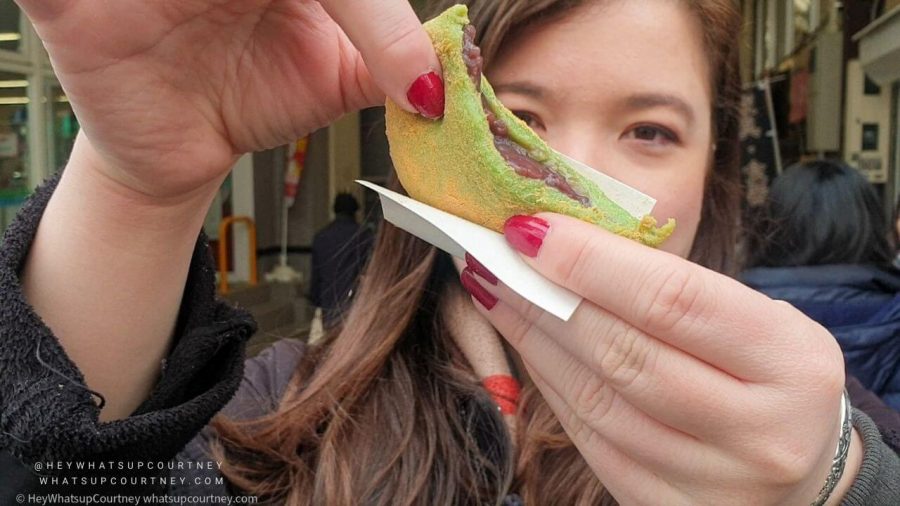
This is also why it’s better to come early, you can see the two men pound steamed rice with massive wooden mallets, working in perfect sync. The pounding transforms the rice into this smooth, sticky, elastic dough. It was so mesmerizing to watch the transformation happen in just minutes. Sometimes, if it gets too crowded, you might not be able to see it from the back.
After the demonstration, I obviously had to try some and omg the fresh mochi was incredibly soft. and let me tell you, this mochi literally melted in my mouth. The texture was completely different from pre-packaged mochi, smoother, softer, and you can chew even with no teeth. They dust it with kinako (roasted soybean powder) which adds a nutty sweetness. It’s so good!
The mochi only costs a few hundred yen and it’s an experience you can’t get anywhere else.
Nagatanien Address: 29, 橋本町 Nara, Nara Prefecture 630-8217, Japan
2. First Deer Encounters & Kofuku-ji Temple
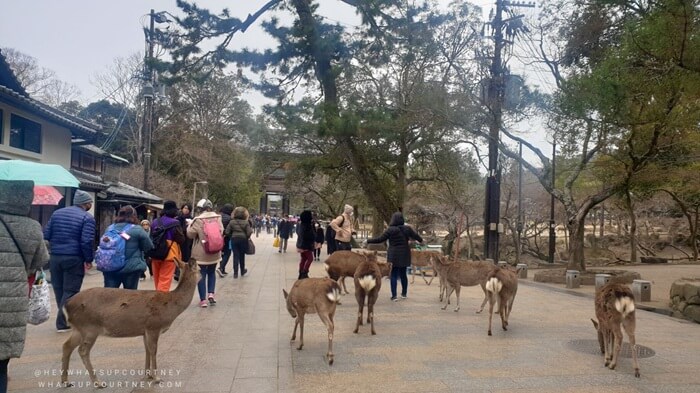
After devouring multiple mochi’s for breakfast snack, we headed towards the Deer park. The moment you step into Nara Park, boom, deer everywhere. It was so exciting to be around so many deers freely roaming around and chilling on the side.
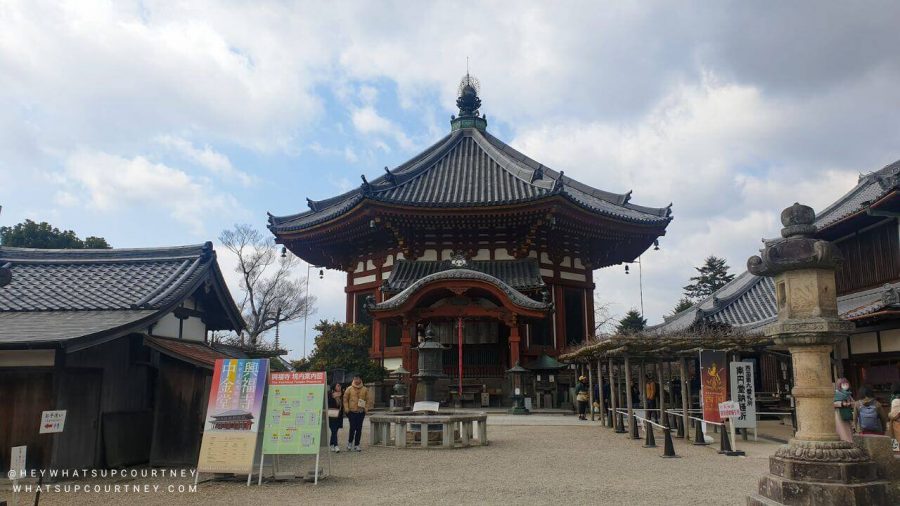
My first stop was Kofuku-ji Temple, one of Nara’s eight UNESCO World Heritage Sites. You can’t miss it because there’s this stunning five-story pagoda that you can see from ages away. This temple dates back to 669 AD and was originally the family temple of the powerful Fujiwara clan.
The temple grounds are free to enter, but a few buildings have small admission fees including the Central Golden Hall, Eastern Golden Hall, and the National Treasure Museum.
The original Central Golden Hall was destroyed in a fire nearly 300 years ago. It has since been rebuilt to its historical scale and reopened to the public in October 2018. Inside, you’ll find Yakushi Buddha.
You’ll also come across the Southern Octagonal Halls, which have stood here for over a thousand years. And although the iconic five-storied pagoda is currently under renovation, it’s scheduled to be completed in 2031.
If you’re into Buddhist art, there’s a National Treasure Museum inside with some incredible sculptures. The admission is around ¥700.
3. Feeding the Deer (And the Great Phone Cable Incident)
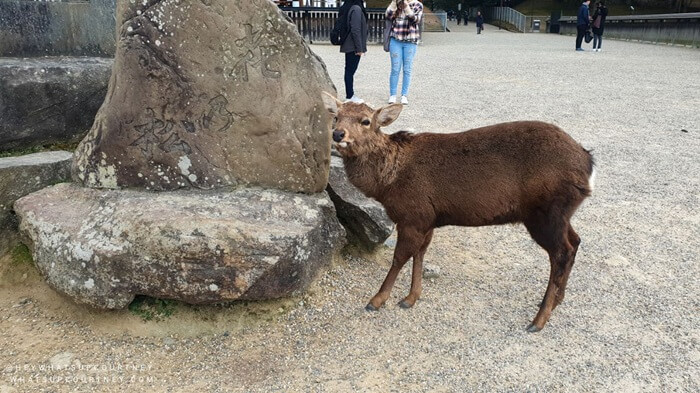
After a small wander around the temple, my partner and I went to buy some deer biscuits. As you may know now, Nara Park is home to about 1,200 to 1,300 semi-wild sika deer. They’re not zoo animals or pets, they’re actually considered sacred messengers of the gods and are protected as a National Treasure of Japan by the locals.
You’ll find deer biscuit vendors all around the park selling shika senbei (deer crackers) for ¥200 per pack. So cute to see some deers park themselves right next to the sellers.
Here are some tips I learned:
Bow to the deer before offering a cracker and many of them will bow back and it’s the cutest thing. I couldn’t stop laughing the first time it happened. I can only assume they’ve been trained by tourists and possibly the locals over years to associate bowing with getting food. Even the baby ones!
You will have to Break the crackers into smaller pieces, you can stretch the biscuits for longer and feed more deers.
Also watch your bags and pockets, and not for pickpocketers but the deers. One deer literally ate my charging cable while my partner was taking a photo of me feeding another deer. My fault really.
Please don’t tease the deers If you wave food around without giving it to them, they can get quite pushy and aggressive. Some of the males with antlers are particularly assertive, and they will headbutt you if they think you’re holding out on them.
Also if you have no biscuits left, show empty hands when you’re done, hold your hands up palms out to show the deer you’re all out of crackers. Most will leave you alone after that. Some might nibble you instead.
I really loved this experience despite losing my phone cable. I mean sure, some deer were pushy and pulled on my pants, but watching them bow was hilarious and charming. And they are just so adorable!
4. Todai-ji Temple & The Great Buddha
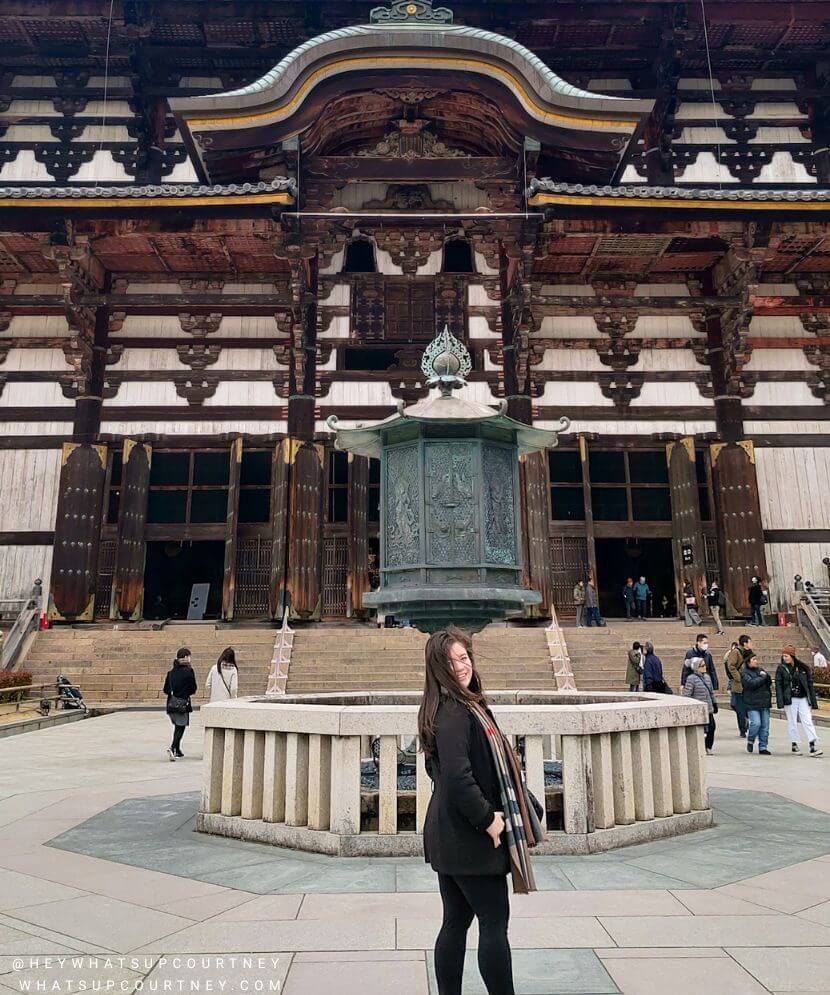
About a 10-15 minute walk through the park brings you to the main attraction: Todai-ji Temple. This is genuinely one of the most impressive temples I’ve visited anywhere in Japan, and that’s saying something after seeing temples in Kyoto and Tokyo.
Before you even reach the main hall, you walk through this massive gate called Nandaimon (Great South Gate) with these fierce guardian statues. These wooden figures are over 8 meters tall and they’re called Nio Guardian Kings and they’ve been protecting the temple since the 13th century.
The main hall, Daibutsuden (Great Buddha Hall), is said to be the world’s largest wooden building. Let that sink in for a second. This entire massive structure was built without nails using traditional Japanese carpentry techniques. It’s been destroyed by fire twice throughout history and rebuilt each time, though the current version is actually smaller than the original due to financial constraints.
Inside this temple sits the Daibutsu (Great Buddha), a 15-meter tall bronze statue that was completed way back in 752 AD. It’s absolutely enormous, photos genuinely don’t do it justice at all. I stood there with my mouth open just trying to comprehend the size of it and the engineering required to create something like this over 1,200 years ago.
Entry fee: ¥600 (worth every single yen)
5. The Buddha’s Nostril Pillar
Here’s something most guidebooks mention but don’t quite prepare you for. There’s a wooden pillar in the hall with a hole cut through it at the base. This hole is supposedly the same size as one of the Buddha’s nostrils.
The pillar is called the Daibutsu-sama no Hana no Ana (Great Buddha’s Nose Hole), though most people just call it the nostril pillar. Legend says if you can squeeze through this hole, you’ll be granted enlightenment in your next life. It’s also supposed to bring good luck and health.
I watched a few people attempt it.
A slim younger lady went first and crawled through pretty easily with room to spare. She popped out the other side looking triumphant while we all cheered. Interestingly she went feet first.
Then a husband and wife team gave it a go. The husband went through first (barely) and had to wriggle and contort to make it. Then the wife got sort of stuck halfway through. Her husband grabbed her legs and pulled from the other side while she wiggled and laughed. Eventually she made it through to applause from the crowd that had gathered to watch, us included.
I took one look at that hole, looked at my body, and made a strategic decision to skip it. I’m easily double their size and I wasn’t about to get wedged in there while tourists filmed it for TikTok. No enlightenment for me this lifetime, apparently! But it was amazing watching others try.
Behind the Great Buddha there’s also a fascinating 1:50 scale model showing what Todai-ji originally looked like. The model includes two seven-story pagodas that were each 100 meters tall flanking the main hall. What an incredible architectural achievement for the 8th century!
6. Nigatsu-do Hall
From Todai-ji, there’s a pleasant uphill walk through trees and stone lanterns to Nigatsu-do Hall (February Hall). It’s a smaller temple but the real reason to come here is the view.
The approach is this steep set of stairs lined with traditional stone lanterns (toro). By the time I reached the top, I was slightly out of breath but the view made it completely worth it.
From the wooden terrace, you get this beautiful panoramic view over Nara city and the surrounding mountains. Even on a regular day when the weather wasn’t perfect, it was a peaceful spot to catch your breath and just soak in the atmosphere.
Entry is free and there are usually far fewer people here than at the main temples, which was such a nice break from the crowds. I sat on the terrace for a good 15 minutes just enjoying the quiet and the view.
The ornate bronze lanterns suspended across the veranda are gorgeous. If you visit during the Omizutori Festival in early March, they light all the lanterns and it’s supposed to be spectacular. This festival has been held annually since 752 AD, making it the oldest recurring Buddhist event in Japan. That’s wild.
7. Lunch Break in Naramachi
By this point, I was absolutely starving. I headed back down the hill and walked towards Naramachi, which is Nara’s historic merchant district. This area is filled with traditional wooden machiya houses, many of which have been converted into cafes and restaurants.
For lunch, definitely try some local Nara specialties:
Kakinoha-zushi (persimmon leaf-wrapped sushi), this is a local specialty where sushi is wrapped in persimmon leaves for preservation. The leaves impart a subtle flavor.
Cha-gayu (rice porridge with tea) an amazing comfort food that’s been eaten in Nara for centuries.
Nara pickles (Narazuke), this vegetables pickled in sake lees. Surprisingly delicious.
If you want something more filling, there are loads of udon and soba shops. I ended up at this small family-run udon restaurant down a side street. The noodles were handmade, thick and chewy, and the broth was rich and flavorful.
8. Explore Naramachi District
After lunch, I spent some time wandering around Naramachi. This neighborhood gives you a glimpse of what traditional Nara would have looked like, with its narrow lanes lined with old wooden buildings.
The area is way quieter and more removed from the bustling touristy parts of Nara Park. I popped into a few craft shops selling traditional pottery and textiles. There are also several free museums if you’re interested in learning more about traditional merchant life.
What I loved about this area was how peaceful it felt. After the crowds at Todai-ji and dodging aggressive deer, it was nice to slow down and just wander through quiet streets admiring the preserved architecture.
9. Kasuga Taisha Shrine (If You Have Energy)
If you still have energy and time, definitely visit Kasuga Taisha Shrine. It’s about a 20 minute walk from Naramachi back through Nara Park (you’ll encounter more deer along the way).
This beautiful Shinto shrine was established in 768 AD by the powerful Fujiwara family clan and is one of Nara’s most celebrated shrines. The approach to the shrine is lined with hundreds of stone lanterns covered in moss, and inside you’ll find even more bronze lanterns hanging from the ceilings, over 3,000 in total, all donated by worshippers throughout the centuries.
Twice a year during the Mantoro Festival (in February and August), all the lanterns are lit, creating an absolutely magical evening atmosphere. I didn’t time my visit with the festival unfortunately, but even during the day, the lanterns are stunning.
The shrine grounds are free to wander around, but there’s a ¥500 fee if you want to enter the inner area to see all those bronze lanterns up close. Worth it if you have the budget.
Pro tip: Deer love hanging around Kasuga Taisha. I saw several peeking out from behind the stone lanterns, which made for some excellent photos.
10. Wander Through Yoshikien & Isuien Garden
After Todai-ji, finish your Nara day trip with a peaceful walk through Isuien Garden and Yoshikien Garden, located right next to each other.
Isuien Garden is the more popular option, but the ¥1,200 entrance fee is quite high even though it includes museum access. Its name means “garden founded on water,” and you can easily spend an hour exploring its 17th-century front garden, 1899 back garden and traditional tea houses.
Beside it, Yoshikien Garden is free for foreign visitors and offers a lovely stroll through its pond garden, moss garden, tea ceremony garden and wooden tea house. It’s smaller than Isuien, but still beautiful, especially in autumn. The garden is open until 5 pm (last entry 4:30 pm).
If you can only visit one, go with Yoshikien Garden, it’s free and still a fantastic experience.
11. Souvenir Shopping on Higashimuki Street
On your way back to Kintetsu-Nara Station, spend some time browsing Higashimuki Shopping Street. This covered arcade is where you’ll find all your souvenir needs. There’s deer-themed everything, keychains, plushies, pottery, clothing, stationery, you name it. If it can have a deer printed on it, they’ve done it.
Things worth picking up:
- Narazuke (vegetables pickled in sake lees), this makes a unique gift
- Local sake, so apparently there are 29 sake breweries in Nara!
- Deer-shaped cookies and sweets, ok This is almost a given
- Traditional crafts, they have pottery, textiles, lacquerware
- Mochi from Nagatanien, If you didn’t grab some earlier, get some and get more
There are also loads of cafes and restaurants here if you fancy an afternoon coffee or early dinner before heading back.
The shopping street is completely covered, so it’s perfect even if the weather turns bad. I spent probably 45 minutes browsing and picking up gifts for family.
Head Back to Kyoto or Osaka
By now, you’ve seen all the main sights, fed lots of deer (and maybe donated a phone cable to their diet), climbed temple stairs, and walked approximately 15,000 steps. You’re probably ready to collapse.
Trains run frequently until late evening, so you don’t need to rush, but I left around 5pm to beat the evening rush hour. The trains get packed with commuters after 6pm, and trust me, you don’t want to stand the whole way back after a full day of walking.
Getting to Nara from Kyoto
Getting to Nara from Kyoto is simple. There are two main train options and which one you take depends on whether you’ve got a JR Pass and how close you want to be to the deer park.
Kintetsu Line (Fastest & Most Convenient)
This is the line that we took from Kyoto and I’d recommend it for most people. The Kintetsu Line runs from Kyoto Station to Kintetsu-Nara Station and takes approximately 35 to 50 minutes depending on which train you catch. The limited express costs around ¥1,160 and saves you about 15 minutes, which I think is absolutely worth it.
Here’s why I loved this option, Kintetsu-Nara Station drops you right at the edge of this covered shopping arcade, and from there it’s a five minute walk to Nara Park.
Trains run: Every 10-20 minutes First train: Around 5:30am Last train: Around 11pm
JR Nara Line (If You Have a JR Pass)
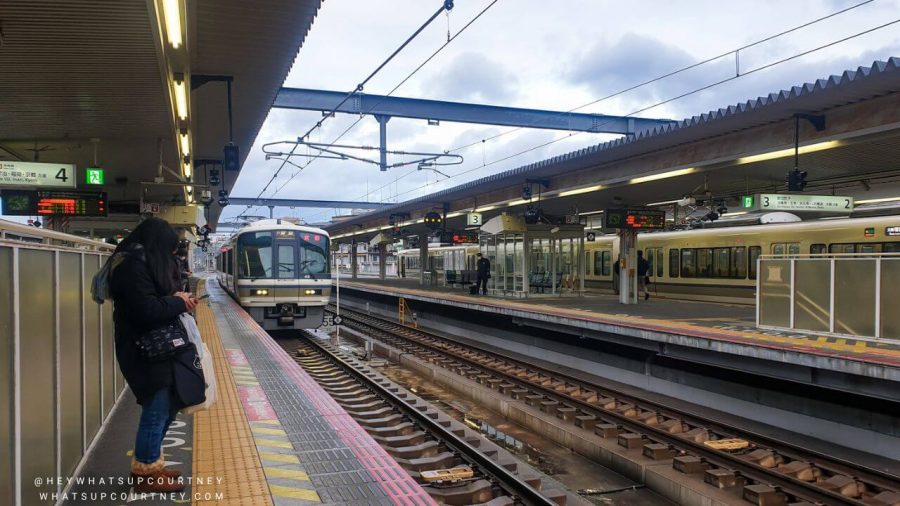
Take the JR Nara Line from Kyoto Station straight to JR Nara Station. It takes about 45 minutes on the rapid service and costs around ¥720. If you’ve got a JR Pass, this journey is covered by your JR Pass, which makes it your best option budget-wise.
The only downside? JR Nara Station is about 15-20 minutes further walk from Nara Park than the Kintetsu station. Still completely doable, but after a full day of walking, you’ll feel those extra 15 minutes.
Pro tip: If you’re planning to visit multiple cities in the Kansai region, consider getting the Kintetsu Rail Pass, which covers trains between Kyoto, Nara, and Osaka.
Getting to Nara from Osaka
From Osaka, it’s pretty much a similar process, you have two main options:
Kintetsu Nara Line:
From Osaka-Namba Station to Kintetsu-Nara Station takes about 35-40 minutes on the express for around ¥680. This is what I’d do if you don’t have a JR Pass because it’s quicker and gets you closer to everything.
JR Yamatoji Line:
From Osaka’s Namba Station to JR Nara Station takes about 45 to 50 minutes and costs around ¥820. Your JR Pass covers this too.
If you’re staying in Osaka, check out Candeo Hotels Osaka Namba which is perfectly located near Namba Station and has an amazing rooftop onsen.
How Long Do You Really Need in Nara?
One day is genuinely enough to see all the main attractions without feeling rushed. I spent about 7 to 8 hours there (8:30am to 5pm) and felt like I’d seen everything I wanted to see.
If you arrive early (by 8 or 9am) and follow an itinerary similar to mine, you’ll comfortably see Kofuku-ji Temple, feed the deer, visit Todai-ji and the Great Buddha, explore Nigatsu-do Hall, wander Naramachi, and maybe even fit in Kasuga Taisha Shrine.
Can you do Nara in half a day?
Technically yes, if you only want to see the deer and Todai-ji. You’d need about 4 hours minimum. But you’d miss out on the quieter temples, Naramachi, and the more relaxed pace that makes Nara special.
Should you stay overnight?
Probably not necessary unless you want to explore beyond the main tourist areas or see some of the outlying temples. Most people (myself included) visit Nara as a day trip and it works perfectly.
Essential Tips for Visiting Nara
The deer can be aggressive
I’m going to keep saying this because it’s important. They’re semi-wild animals. They know what food looks like and they will come after you. One literally ate my phone cable. Protect your belongings, secure all bag zippers, don’t leave anything hanging out, and keep maps and pamphlets in your pockets not your hands.
Bring cash
Loads of small restaurants and shops only take cash. There are ATMs around but it’s easier to just bring money with you. I’d recommend at least ¥5,000-10,000 for the day.
Wear comfortable, broken-in shoes
You’ll be walking loads, often on uneven ground, gravel paths, and up temple stairs. I wore my most comfortable trainers and my feet still hurt by the end of the day.
Entry fees are cheap
Most temples charge between ¥300 to ¥700. Nara Park itself is completely free. Deer crackers are only ¥200 per pack. It’s an incredibly affordable day trip.
Arrive early
Cannot stress this enough. Getting to Nara by 8 or 9am makes SUCH a massive difference. The temples are quieter, the deer are calmer, you can actually take photos without hundreds of people in them, and you beat the tour groups.
Download offline maps
Google Maps works great in Japan but download the offline map for Nara just in case. The park is quite spread out and having navigation helps.
Bring water and snacks
There are vending machines and convenience stores around, but bringing your own water bottle and some snacks is smart. You’ll be walking in the heat for hours.
Please don’t taunt the deer with food
This should be obvious but apparently needs saying. If you wave crackers around without giving them to the deer, they will get aggressive and may headbutt or bite you. Just feed them properly and respectfully.
Where to Stay for Your Nara Day Trip
Most people visit Nara as a day trip from Kyoto or Osaka, which is what I recommend. It’s so easy to reach from both cities and there’s no real need to stay overnight unless you want to explore the wider Nara Prefecture.
From Kyoto: Check out my complete 4 days in Kyoto itinerary to help plan the rest of your trip. For accommodation, I’ve got recommendations for great hotels in Kyoto.
From Osaka: The Candeo Hotels Osaka Namba is brilliant. It’s perfectly located near Namba Station making getting to Nara super easy, plus they have a rooftop hot spring bath which is amazing after a long day of walking.
Staying in Nara itself: If you do want to stay overnight, there are some lovely traditional ryokans in Nara, especially near Nara Park. This gives you the flexibility to explore early morning and late evening when the crowds thin out. Search Nara accommodation here.
Best Seasons for Nara
Spring (March to May): Cherry blossoms bloom throughout Nara Park in late March to early April. The pink petals with deer and ancient temples make for incredible photos. Peak tourist season though, so arrive extra early and book trains in advance.
Autumn (October to November): Those stunning red and gold autumn leaves frame the temples perfectly. I visited in late autumn and the colors were incredible. Slightly fewer crowds than spring but still busy.
Summer (June to September): Hot, sticky, and humid. June is rainy season but quieter. If you visit in summer, bring a small towel for sweat and lots of water.
Winter (December to February): Quietest season with hardly any tourists. Seeing deer with frosted whiskers sounds adorable. Cold but manageable.
My recommendation: Late March to early April for cherry blossoms, or late October to November for autumn colors. Both are stunning, just be prepared for crowds. But you know what, just go whenever you are there especially if its your first time, this is just a quick guide, because I loved Nara, it’s so adorable, different and rich in history as well.
Combining Nara with Other Day Trips
If you’re spending several days in Kyoto, Nara combines really well with other day trips:
Osaka: Only 30-40 minutes from Nara by train. Spend the day eating your way through Dotonbori and checking out Osaka Castle.
Uji: About 30 minutes from Nara. Famous for green tea, beautiful temples, and way fewer tourists than Kyoto.
Fushimi Inari: While this is technically in Kyoto, you could combine a morning at Fushimi Inari with an afternoon in Nara if you’re really ambitious. I wouldn’t recommend it though, both deserve proper time.
For more inspiration, check out my complete Japan travel guide which covers two weeks of itinerary including Tokyo, Hakone, Kyoto, and Osaka.
Is Nara Worth Visiting?
Absolutely yes. Without hesitation, yes.
I went into Nara thinking it would just be “the deer place”, a quick stop to feed some animals and tick a box. But it turned out to be so much more than that. The temples are magnificent and genuinely awe-inspiring. The history is fascinating (Japan’s first permanent capital!). The atmosphere is completely different from the bustling energy of Kyoto and Osaka, it’s more relaxed, more peaceful, easier to navigate.
And yes, the deer are brilliant, even if one did eat my phone cable.
What surprised me most was how un-touristy parts of Nara felt. Once you wandered away from the main Todai-ji Temple area into places like Naramachi or up to Nigatsu-do Hall, it was quiet and peaceful. You could actually breathe and take your time without feeling rushed by crowds.
The key to having a great time in Nara is arriving early. I’m going to say it one more time because it matters that much: take that early morning train. The difference between arriving at 8:30am versus 11am is enormous. You’ll see everything at its best, the deer are calmer, and you can actually enjoy the experience without feeling overwhelmed.
Oh, and seriously, watch your belongings around the deer. I cannot stress this enough. They will eat your maps, your tickets, your phone cables, whatever they can grab. Keep everything secured in closed bags. Don’t say I didn’t warn you!
If you’re planning a trip to Japan, don’t skip Nara. It’s such an easy day trip from Kyoto or Osaka, it won’t cost you a fortune, and you get to experience a completely different side of Japan. Plus, where else can you feed sacred deer that bow to you, see a 1,200-year-old bronze Buddha, and eat fresh mochi that melts in your mouth all in one day?
Have questions about your Nara day trip? Drop them in the comments and I’ll help you out!
Safe travels!
Courtney xx
Explore my other Tokyo, Kyoto and Japan Travel Guides on WhatsupCourtney below:
My Japan Travel Guide 2025: First Timer’s Itinerary and Everything You Need to Know
4 Days in Kyoto Itinerary: Complete First-Timer’s Guide : Complete day to day itinerary to Kyoto in 4 days
Candeo Hotels Roppongi review : The full review of the Candeo Hotels in Roppongi district
10 GREAT THINGS YOU MUST DO AND EAT AT ROPPONGI TOKYO
10 Must-Know Japan Travel Tips for First-Time Visitors (2025) : Essential before you go
Candeo Hotels Shimbashi Tokyo with a Sky Spa (Hotel Review 2026)
10 Best Things to Do in Hakone Japan: Complete Guide (My 2-Day Experience)
WhatsupCourtney
Owner / Traveller / Content Creator
Hey! I’m Courtney, traveller and content creator behind the travel and food blog WhatsupCourtney. I’ve spent over 10 years exploring travel destinations across Asia, Europe and beyond with a particular focus on cultural experiences, adventures and their food. Instead of the traditional curated Instagram style blogging, I am trying instead, to show you the realistic, raw, and exotic side of travel and a whole lots of food that goes with it. Because I believe food is part of the country culture and needs to be tried and shown proudly.
I have recently traveled around Shanghai China, day trips to Dubai and Paris, explored the Golden Route in Japan, and as you know I was born and raised in Jakarta Indonesia so will be providing lots of Indonesian travel tips and Newcastle Upon Tyne UK travel guides as a local.

Fantastic guide! Osaka, Kyoto, and Nara each have so much to offer, and combining them into a private day trip makes the most of limited time in Japan.
We also published a detailed private day trip guide from Osaka to Kyoto and Nara, covering key sights and tips for first-time travelers:
https://japanichibantours.com/from-osaka-kyoto-kyoto-nara-private-day-trip/
Thanks for this great travel resource!