
I nearly did not bother with the hike up Fushimi Inari Taisha to the top.
I had seen Fushimi Inari Taisha shrine on Tik Tok many times before I got to Kyoto. Red gates with no crowds and stunning golden light or a moody vibe.
I arrived at about 8am thinking “well they always say go earlier, less crowds right?”
I thought 8am was going to be late and full of people, stressing quite a bit getting here from our hotel.
Table of Contents
Here are my top picks Hotels in Kyoto if you plan to stay:
⭐ The Thousand Kyoto : modern, peaceful and next to Kyoto Station. Perfect if you’re coming in by train.
⭐ Gion Yoshi-Ima Ryokan : a traditional tatami-room stay in Gion for the full Japanese experience, stunning rooms and good location as well.
⭐ Candeo Hotels Kyoto Karasuma Rokkaku : stylish, clean and central without the huge price tag, plus great decor and lovely rooms.
⭐ Inari Ohan : Stay 9 minutes away from Fushimi Inari Taisho Shrine in a traditional Japanese hotel, great mix of old and new.
⭐Urban Hotel Kyoto : 12-minute walk from Fushimi Inari Shrine and modern with a great price
Tip: Book early. Kyoto’s tourism has bounced back strong and prices rise closer to travel dates.
But happy to say, 8am was ok, it wasn’t incredibly crowded, there were several people mingling around, and the shops were getting ready to open.
We started our climb. And somewhere between the halfway viewpoint and the upper forest, the crowds grew less and it got bit cooler.
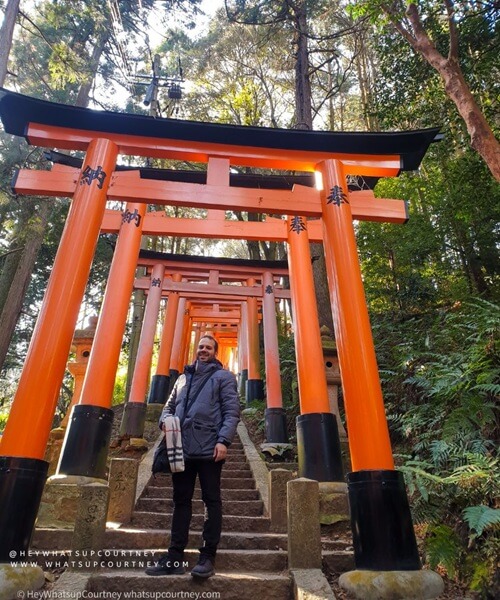
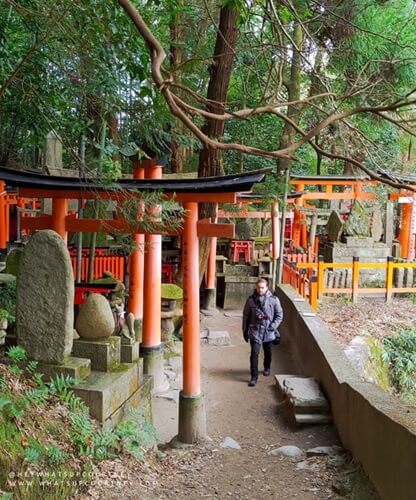
There were small fox shrines appeared in alcoves along the way. I thought I had reached the summit, stopped, looked around, cheered with my partner (not in a loud manner don’t worry), and was about to head back down.
A gentleman standing next to me on the path looked over and said ” oh no, you need a couple more steps.” and pointed up. There is a small shrine just up there. That is the actual top.
We thanked him profusely as I wouldn’t have known this. Although there was a sign which we didn’t see.
A couple of steps up into a small shrine at 233 metres. And we did it! Made it to the top of Fushimi Inari Taisha shrine! Probably lost 1000 calories which will be replenished later at lunch ha!
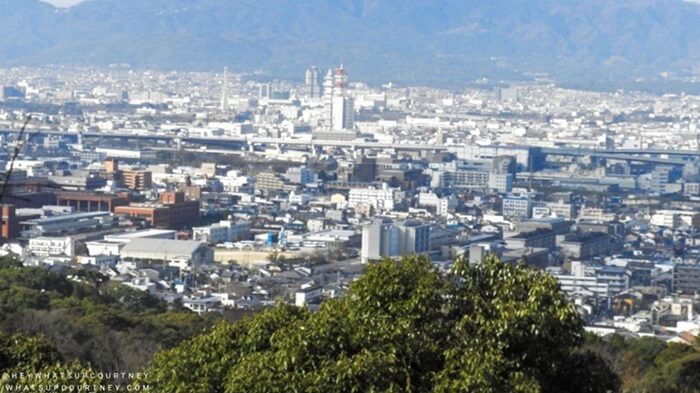
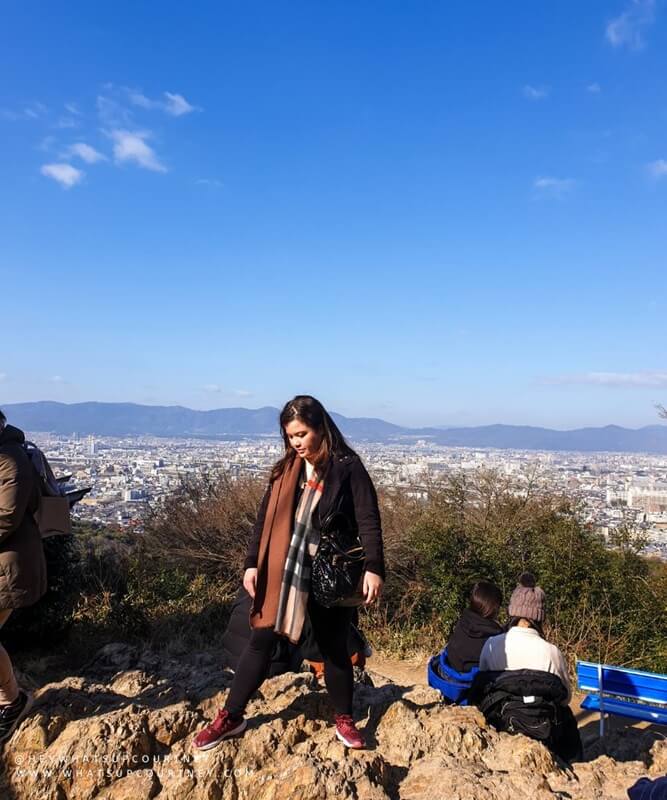
Did we see a view from the top, you can see in the pictures below. The best view point is actually from mid way through walking to the top, the section with the restaurant and resting point.
If you are staying nearby to Fushimi Inari Taisho Shrine, might be awesome to come by and maybe do a tour at night to have a look around, they are open all day, and maybe see a fox or two.
Read on for the guide about Fushimi Inari Taisha.
What is Fushimi Inari Taisha?
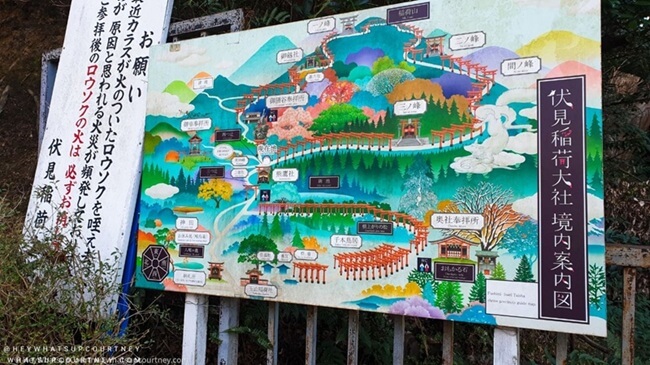
So apparently Fushimi Inari Taisha is a Shinto shrine, not a Buddhist temple. And I only just knew this that the easiest way to tell the difference between them is that the shrines have torii gates, and temples mostly do not.
Also if a name ends in -ji, it is a temple. Taisha means head shrine. Nice fun fact for your next party trick.
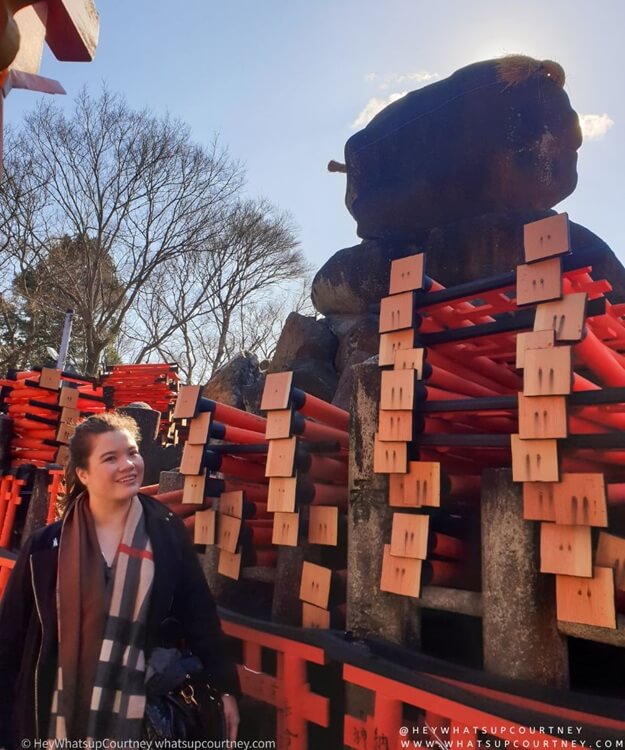
The shrine was founded in 711 AD, 83 years before Kyoto became Japan’s capital. It is the head of around 40,000 Inari shrines across the country. Inari is the Shinto deity of rice, sake, foxes, and business prosperity. The stone fox statues throughout the mountain are Inari’s messengers.
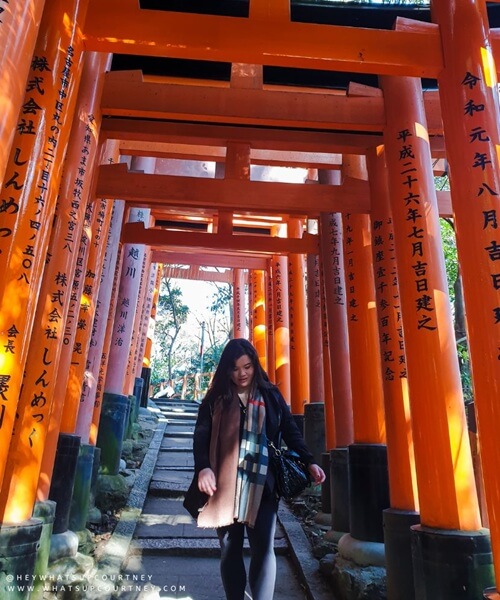
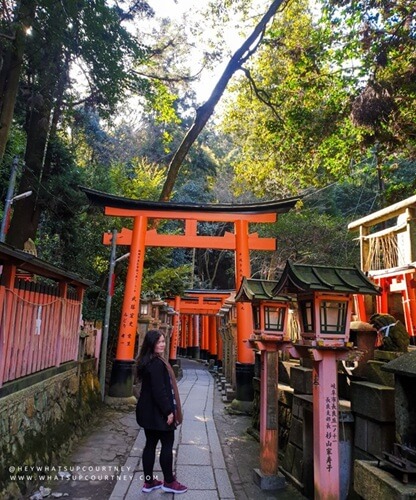
And for the red Torii gates, every single torii was paid for by a person or a business as an offering to Inari, seeking blessing for prosperity.
You can read in the front of each gate has the donor’s name and the date it was erected. The back says the Japanese characters for offering. Individual gates could cost between 400,000 and 1,000,000 yen. There are approximately 10,000 of them.
Also there are few empty spaces when I was there, if you fancy paying for one?
I have a list of the best sightseeing things to do in Kyoto Japan, you can read what you can do while you are here.
Is Fushimi Inari Taisha Worth Visiting? What to Expect Before You Go
For me, it was so worth it, I thoroughly enjoyed the experience, it was different, and also you get a great workout from it. If you are spending 4 to 5 days in Kyoto, then definitely use one of your days to visit here.
Fushimi Inari Taisha shrine is free and it is open 24 hours. There have been sightings of wild boars at night at the shrine too.
What you have to prepare for: the lower section, the famous Senbon Torii tunnel, is very crowded between 9am and 4pm. If you can come early for the light or if you like to check it out at night, it’s probably going to be less busy.
Yes, I did say the top is quieter but the bottom half, can get conjested. It was like that on our way down, but everyone was chill about it so it was at a good pace.
What are the different sections in Fushimi Inari Taisha?
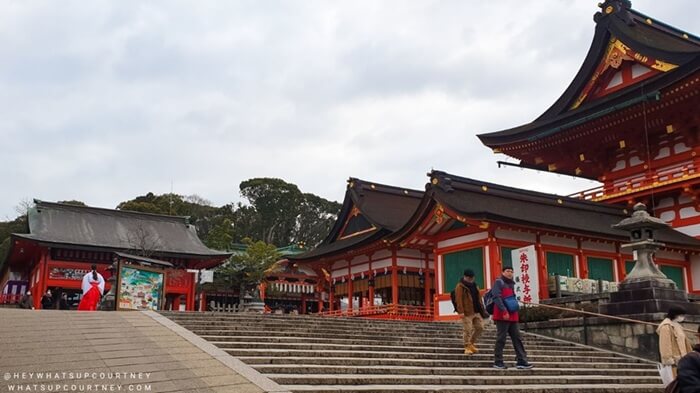
The main shrine buildings
Before the famous gate tunnel, you pass through the main shrine complex. Most people barrel through heading for the gates. Do not do that. The main hall is dedicated to Inari and has the smell of a place in continuous use for over 1,300 years: incense, old wood, something I cannot name. Spend a few minutes here before the crowds arrive.
The Senbon Torii
The tunnel of gates behind the main shrine is roughly 500 metres with over a thousand torii so close together they form an almost solid orange corridor. The path splits into two parallel tunnels at one point. It does not matter which you take. They reconnect.
It is exactly as impressive as the photographs. And between 9am and 4pm you will be experiencing it shoulder to shoulder with a lot of other people. This is fine. But do not turn around here, because you have not seen the part that makes the journey worth it.
If you are looking for experiences and things to do in Fushimi Inari Taisho, here are some suggestions:
Kyoto Fushimi-Inari Night Walking Tour
Kyoto: Table-Style Tea Ceremony at a Kyo-Machiya (very popular)
Kyoto Ghost Tour: Dark Tales, Legends, Bamboo Forest Night
Kyoto: 3-Hour Fushimi Inari Shrine Hidden Hiking Tour
The Yotsutsuji intersection
About 30 to 45 minutes uphill from the main entrance, the trail reaches Yotsutsuji. The path splits here and suddenly there is a gap in the trees with southern Kyoto spread below you. On a clear day you can see the Nintendo headquarters. The crowds thin significantly here. A lot of people turn back at Yotsutsuji, which means the section above it is immediately quieter.
If you are short on time or energy, turning back here is reasonable. You have the view. But if you have another hour, keep going.
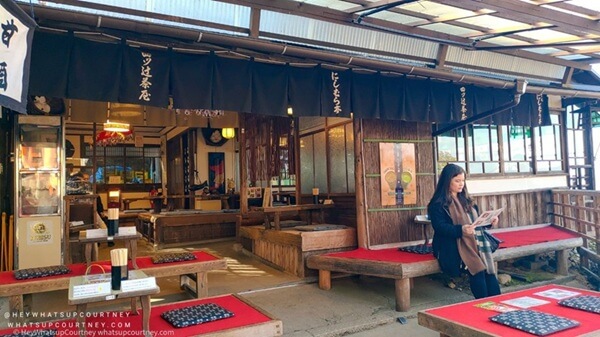
The summit loop
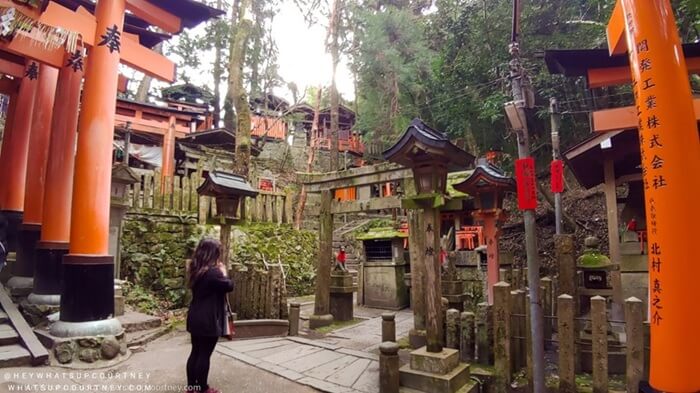
Above Yotsutsuji the gates thin out but get more interesting: older, weathered, some cracked and tilting, a few with moss working its way across the vermilion paint. The forest closes in. The sound from the city below disappears.
You pass Okusha sub-shrine, which feels old in a way the lower section does not. Small waterfalls. More fox shrines in alcoves with offerings left by Japanese visitors: sake bottles, small figurines, weathered envelopes. Just after the first torii tunnel above Okusha, branching right, there is a small path to a hidden bamboo grove. Five to ten minutes. Worth it.
I thought I had reached the summit. I stopped, looked around, and was about to head back.
As I mentioned earlier, the gentleman on the path told me to go a couple more steps. A small shrine just above. That is the actual top.
Two more minutes through a final cluster of older torii. A small quiet shrine at 233 metres. Almost no one there.
How to get to Fushimi Inari Taisha Shrine?
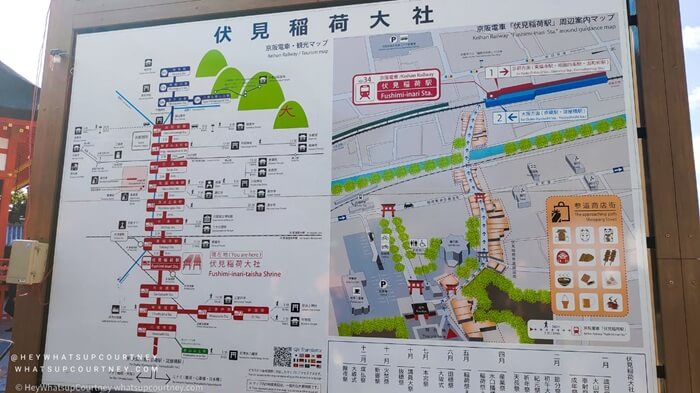
To get here you can take the JR Nara Line from Kyoto Station to Inari Station which is about five minutes and costs around150 yen. The station exit is directly across the road from the shrine’s main gate. That is the complete set of directions.
From Osaka it is about fifteen minutes on the same line. The shrine is actually closer to Osaka than it is to the Gion district of Kyoto, which is worth knowing if you are deciding where to base yourself.
You can also take the Keihan Line to Fushimi-Inari Station, a seven-minute walk from the shrine. Useful if you are coming from the Kiyomizudera area of eastern Kyoto.
| Getting there JR Nara Line: Kyoto Station to Inari Station, 5 minutes, 150 yen. Covered by JR Pass. Station exit is directly opposite the shrine gate. From Osaka: approximately 15 minutes on the JR Nara Line. Keihan Line: to Fushimi-Inari Station, 7-minute walk to shrine. JR Pass: covers this line and the Shinkansen between cities. |
Practical Information about Fushimi Inari Taisha
Fushimi Inari Taisha Address: 68 Fukakusa Yabunouchicho, Fushimi Ward, Kyoto. JR Inari Station exit is directly across the road.
Entry to Fushimi Inari: Completely free. Open 24 hours, 365 days a year.
| Tours worth booking Early morning Fushimi Inari tour (7am): beats the crowds, takes you onto side paths most visitors miss, consistently well-reviewed. Kyoto Early Bird English Tour: Fushimi-Inari and Arashiyama or Kyoto/Osaka: Nara, Arashiyama, Fushimi Inari Taisha Day Tour |
What you can do in Fushimi Inari Taisha?
Fushimi Inari is in the south of Kyoto, near Tofukuji Temple. If you are visiting in November, doing Fushimi Inari early morning and then Tofukuji for the autumn foliage makes a very good southern Kyoto morning.
It is not naturally combined with Arashiyama or Gion, which are on opposite sides of the city. Give Fushimi Inari its own half-day. It deserves it and also to yourself to fully enjoy it.
Questions I wish someone had answered before I went to Fushimi Inari
Is Fushimi Inari Taisha shrine free?
Yes, completely. Open 24 hours, every day of the year. No ticket, no booking, no entrance fee at any point on the trail. The souvenir shops are staffed from roughly 9am to 5pm but you are not paying to be there. One of the best free things you can do in Japan.
How long does the Fushimi Inari hike take?
This depends on how far you go and also your fitness level. The Main shrine and Senbon Torii, I would say about an hour or so. To Yotsutsuji viewpoint and back: 1.5 to 2 hours. Full summit loop: 2.5 to 3 hours. The trail is 4km and 233 metres of elevation. Not difficult but it is quite an uphill hike especially the further up you go.
What time should I arrive to avoid crowds?
Before 7am. Trains from Kyoto Station run from around 5:30am. The second-best option is after 6pm when the lanterns come on and the tour groups have gone. Midday is the worst window. 4pm is better than noon but not by as much as I thought when I tried it.
Can you visit Fushimi Inari at night?
Yes, and it is worth doing. The lower gates are lit with lanterns. The upper sections are darker and a headtorch is useful. No closing time. Safe. Much quieter than daytime. The shrine cats are out. Occasionally wild boars and foxes appear on the upper trail (so I was told but I cannot confirm). Completely harmless if you do not approach them though maybe be weary of boars. A highlight if you are the kind of person who finds that kind of thing interesting rather than alarming.
Do I need to hike all the way to the summit?
You do not have to. But when you think you have reached the top, look for a small path continuing upward through a cluster of older torii. The true summit has a small shrine two minutes further than where most people stop. Go there.
Is the hike up Fushimi Inari Shrine hard?
Again it depends on your fitness level but moderately I would say. There are steep parts in sections, a lot of stairs, 233 metres of elevation. Average fitness manages it without trouble. In summer the humidity is the harder part, not the incline. Wear proper shoes. Bring water. Bring more water than you think you need.
Do I need a guide at Fushimi Inari Shrine?
Not strictly. But having one made the visit different for me. The shrine is beautiful without context. With someone explaining what the fox statues mean, what the inscriptions on the gates actually say (mostly local businesses), and where the hidden side paths are, it becomes a different experience. GetYourGuide has good options for both early morning and afternoon tours.
I nearly did not bother walking to the summit but I’m glad I did. I stayed about three hours and it was one of the best things I did in Kyoto. Go early. Keep climbing. And when you think you are at the top, look for the small path just above you.
How was your experience at Fushimi Inari Shrine in Kyoto?
Courtney xx
Just a heads up! This post may contain affiliate links, meaning I get a commission if you decide to purchase something through the links, at no additional cost to you. Your support helps me continue provide the best information to help you with your travels. Thank you!
Explore my other Tokyo, Kyoto and Japan Travel Guides below:
Planning your Japan trip? Start here:
4 Days in Kyoto: The Perfect Itinerary You’ll Want to Copy
How to Spend 1 Day in Kyoto Without Feeling Rushed (2026)
The Best Sightseeing Things to Do in Kyoto Japan (what’s worth going and 3 places to skip)
• Is Arashiyama Bamboo Forest a tourist trap?: my honest take
• Is Arashiyama Monkey Park worth visiting?
Japan Travel Tips:
My Japan Travel Guide 2026: First Timer’s Itinerary and Everything You Need to Know
• Japan travel tips for first-timers: The Japan Travel tips I have learnt on my trip
• Best time to see cherry blossoms in Japan 2026: the complete sakura timing guide
Japan Day trip guides:
• Nara day trip from Kyoto or Osaka: deer, temples, and the best pounded mochi
Where to Stay in Hakone (2026): Best Areas, Ryokans & Hotels (What I’d Book Again)
Hakone Japan: 10 Must-Do Experiences & Things to do in Hakone
The 10 Best Things to Do in Odawara Japan (Why you should visit + Day Trip Itinerary)
Japan Hotel Reviews:
Candeo Hotels Roppongi Review: Is This Tokyo’s Best Value Luxury Stay?
Candeo Hotels Shimbashi Review: The Tokyo Hotel That Surprised Me
Candeo Hotels Osaka Namba with Japanese Breakfast & Sky Spa 2025 Review
Tokyo Travel Guides:
Roppongi Tokyo: 10 Things to Do, See & Love in the City That Never Sleeps
HeyWhatsupCourtney
Hey! I’m Courtney, traveller and content creator behind the travel and food blog WhatsupCourtney. I’ve spent over 10 years exploring travel destinations across Asia, Europe and beyond with a particular focus on cultural experiences, adventures and their food. Instead of the traditional curated Instagram (@heywhatsupcourtney) style blogging, I am trying instead, to show you the realistic, raw, and exotic side of travel and a whole lots of food that goes with it. Because I believe food is part of the country culture and needs to be tried and shown proudly.
I have recently traveled around Shanghai China, day trips to Dubai and Paris, explored the Golden Route in Japan, and as you know I was born and raised in Jakarta Indonesia so will be providing lots of Indonesian travel tips and Newcastle Upon Tyne UK travel guides as a local.


Leave a Reply