
This was my first trip to Shanghai, normally I would have gone to Beijing or Xi’an and Shanghai completely won me over.
I went for my best friend’s birthday. She has just moved there for work and had a week off, so we spent it exploring the city together.
What I found was skyscrapers, yes, but also tree-lined streets that felt like Paris, a 400-year-old garden sitting in the middle of a modern city, and so many and I mean many incredible bakeries around which I found out was more of a Shanghai thing.
I also went during the Mid-Autumn Festival public holidays, which meant huge crowds similar to the ones you seen on videos I’m sure, but don’t worry, it is a very organised crowd in the touristy areas, there are police presence managing the crowds which for me was great, so you just go with the flow.
I did my best to explore most of Shanghai, it is a very big city, great for shopping, food and culture, and there are some I wish I had done, a couple that you could skip if you don’t have time, and that’s why I created this things to do in Shanghai guide is to give you an idea what you can do in Shanghai.
In a Rush? Here Are My Favourite Hotels in Shanghai
⭐️⭐️⭐️⭐️ Crowne Plaza Shanghai Nanjing Road by IHG : Located on the street of East Nanjing Road and People’s Square is close by. Modern rooms, with a pool and fitness centre for $$$
⭐️⭐️⭐️⭐️⭐️The Langham Shanghai Xintiandi: Luxury and beautiful hotel near various trendy clubs, international restaurants and designer boutiques. Spa, pool and fitness centre. Also next to South Huangpi Road Subway Station (Line 1).
⭐️⭐️⭐️⭐️ Grand Hyatt Shanghai: Located in Pudong, the hotel is in Jinmao Tower and next to Lujiazui Subway Station. Next to Super Brand Mall and the famous Oriental Pearl TV Tower, the views of Shanghai from the restaurant is incredible.
⭐️⭐️⭐️⭐️ The Eton Hotel : located in central Shanghai Pudong area, next to Pudong Avenue subway station, has spa and pool and great rooms (I’d say for the price, great reviews, this is a luxury hotel on budget price).
⭐️⭐️⭐️ Campanile Shanghai Bund Hotel : Located near to the Yu Gardens, People’s park, also near Dashijie Station (line 8) and 570 metres from Yu Garden Station (line 10). It’s not luxury but great for the price and location as well.
⭐️⭐️⭐️⭐️⭐️The St. Regis on the Bund, Shanghai : Probably the most luxurious hotel on this list and in Shanghai, the view of Pudong skyline with the Oriental Pearl tower is beautiful for higher
Hotel website I use: Booking.com | Expedia
My Quick Answer: What are the Best Things to Do in Shanghai?
So as you know, I’m all about honesty and helpful planning for you, so if I had to name three things to do in Shanghai you absolutely have to visit, I would suggest the Bund at night (the lights turn on at 6pm) and you can see the skyline of Shanghai nearby, Yu Garden and it’s surrounding bazaar, and the French Concession (it’s a different experience) for a full afternoon of wandering and eating.
These areas are my top 3 highlights to visit here, and they are so different to one another, from a mix of modernity, Western mix with Eastern culture and the traditional temples, and give you a very good feel for why Shanghai is unlike anywhere else.
and if you are visiting during Chinese New Year, I have a guide on what you can do during this time and learn more on the customs and traditions.
And if this is your first time in Shanghai, I recommend reading my guide to first time in Shanghai, and get you sorted before your trip and includes which apps to download and more.
My Top Things to do in Shanghai
1. Walk the Bund at Two Different Times of Day
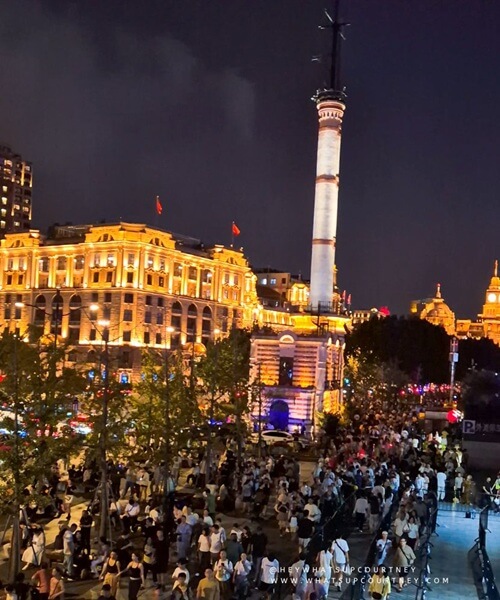
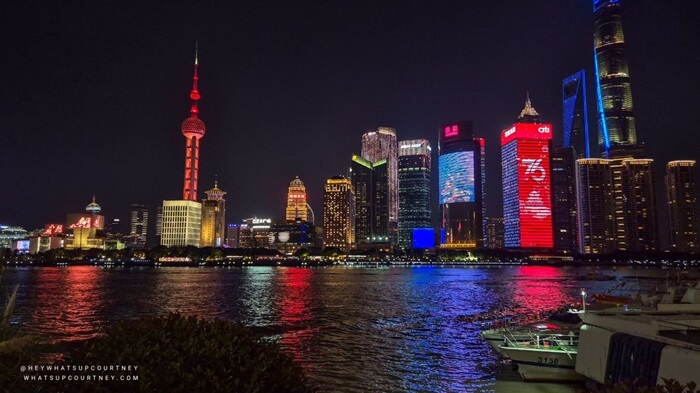
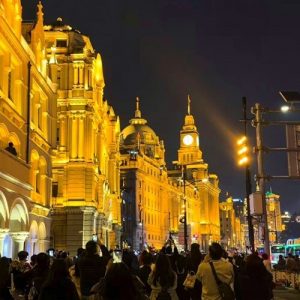
I would say The Bund is the most iconic street in Shanghai and I personally love the views especially at night when the lights are turned on and it’s a completely different vibe to the day time.
On one side you have 52 colonial-era buildings running along the Huangpu River. On the other side, directly across the water, Pudong’s futuristic skyline with the iconic Shanghai tower.
If I were you, I’d go twice and if you have the time. You can visit once during the day and then again around 4 or 5pm, stay until the lights come on across the river. The evening version is what you’ve seen in photos and I have to say it is incredible.
You can take an underground train across the river as well.
I went at around late afternoon, and stayed for the lights switch on and wandered around and the viewing point where you can see across the river to the skyline.
If you fancy a river cruise, you could take the public ferry costs ¥2 and gives you the same view from the water. The Bund sightseeing tunnel on the way back is worth doing once too. It’s strange and trippy in the best way.
The Bund Sightseeing Tunnel
The Bund Sightseeing Tunnel runs underneath the Huangpu River and connects the Bund on the Puxi side to Pudong on the other.
It costs ¥55 one way or ¥85 return and takes about five minutes.
The tunnel itself is lined with lights and projections that change colour as the little pod carries you through, it’s a bit strange, a bit trippy, and fun for what it is.
I wouldn’t say it’s a must-do but it’s a great alternative to the metro if you’re already at the Bund and heading to Pudong anyway. Kids would love it. Adults will either love it or find it completely unnecessary. I enjoyed it but then again I love doing these sort of things, my friend was completely unbothered haha.
Metro: Lines 2 or 10 to East Nanjing Road Station.
2. Eat Your Way Through Yu Garden and the Bazaar
Yu Garden is a classical Chinese garden from the Ming Dynasty, dating back to 1577. Ponds, pavilions, dragon carvings on the walls, ornate arches everywhere. It’s worth a proper walk through and the entry fee is reasonable at ¥40 to ¥50.
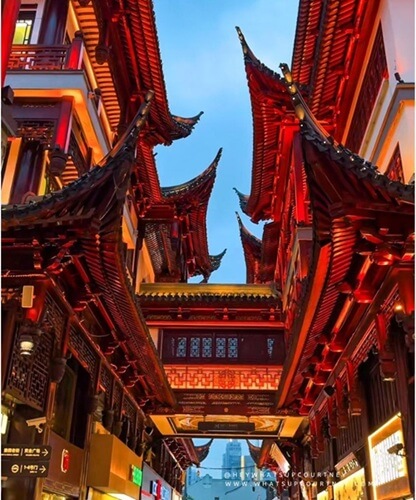
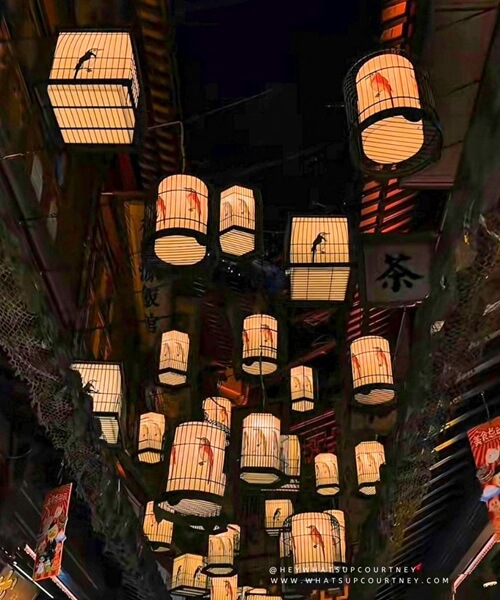
What I loved more was the free bazaar surrounding it. It’s a maze of covered alleys with upturned rooflines packed with tea shops, silk stalls, snack vendors, and souvenir shops. During the Mid-Autumn Festival there were more varieties of mooncake than I knew existed. Please do try at least one. The lotus paste ones are my favourite.
Nanxiang Steamed Bun Restaurant is right here and hopefully there’s no queue when you come but if there is, then joining the queue is needed. It can take up to 30 to 40 minutes but their xiaolongbaos are very good.
They also have a HeyTea and Chagee here, I was so grateful for this as it was so hot and needed water but I can’t find a shop when I went. HeyTea red grape tea for the win, it’s so good if you can try it when its back in season.
Travel Toilet tip: There’s a public toilet in the alleyway near the market near Hey Tea. It’s clean but always bring tissues, and once you’re inside by the stalls it’s a free-for-all. First open stall you see, you take. I learnt this the hard way when so many rushed in after me and took the open stalls, especially after everyone queued in a row so nicely!
If you are able to time your visit to arrive around 5:30pm. The bazaar lights up at 6pm and the whole area looks completely different, and so pretty. You can dress up in traditional Chinese clothing here too if you like.
Yu Garden hours: 8:30am to 5:30pm, March to October. Entry ¥40 to ¥50. Bazaar is free. Metro Line 10 to Yuyuan Garden Station.
3. Spend an Afternoon in the French Concession
Between 1849 and 1943, the French controlled this part of Shanghai, and the architecture still shows it. Walking through streets like Wukang Road and Fuxing Road feels nothing like the rest of the city. It’s quieter, leafier, and the kind of neighbourhood you walk through without a plan and end up staying for hours.
Fuxing Park is lovely in the mornings. Locals practice tai chi, play traditional instruments, do ballroom dancing to music from a portable speaker. It’s one of those things you stumble across and end up watching for twenty minutes. Completely free.
Tianzifang is a pedestrian neighbourhood of narrow alleys filled with small shops, art studios, and cafes. It gets touristy but it has more character than most similar areas. Walk further into the back alleys past the obvious entrance and it gets noticeably better.
I’d spend at least half a day here. If you’re staying in the French Concession, as I’d recommend for first-timers, this is practically on your doorstep. Read my [where to stay in Shanghai guide internal link] for why this area makes the most sense as a base.
Metro: Shaanxi South Road (Lines 1, 10, 12) or Changshu Road (Lines 1, 7, 15). Free to wander.
If you are looking for an Esim with VPN, Airalo is a good one to have
4. Eat pastries at the Bakeries
Nobody warned me about Shanghai’s bakery scene before I went and it was one of the best surprises of the trip.
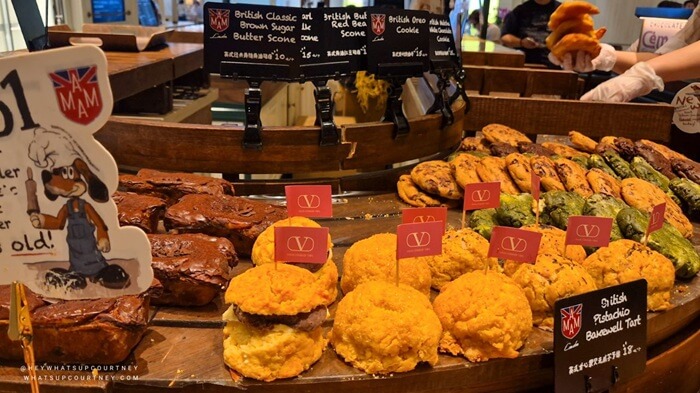
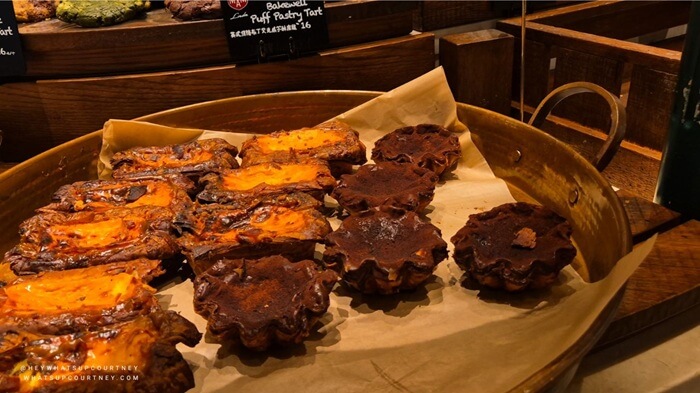
AMAM Lonbakery Town is the one I kept going back to. It’s a London-born chain with locations in Xintiandi and near West Nanjing Road. The egg tarts are the thing: crispy outside, silky inside, and not too sweet. The chocolate croissant is also very good. Expect a queue at peak times but it moves fast and the prices are low.
I was so amused as the name of the pastries were scones, bakewell tart and the traditional English pastries but the actual pastry were chinese like and they were still so so good!
Pain Chaud is a French bakery with multiple Shanghai locations and a strong reputation for croissants. Baker & Spice on Anfu Road is great if you’re already in the French Concession. For something more traditional, Shen Da Cheng on Nanjing Road has been open since 1875 and does chewy Chinese pastries that are completely different from the French-style spots.
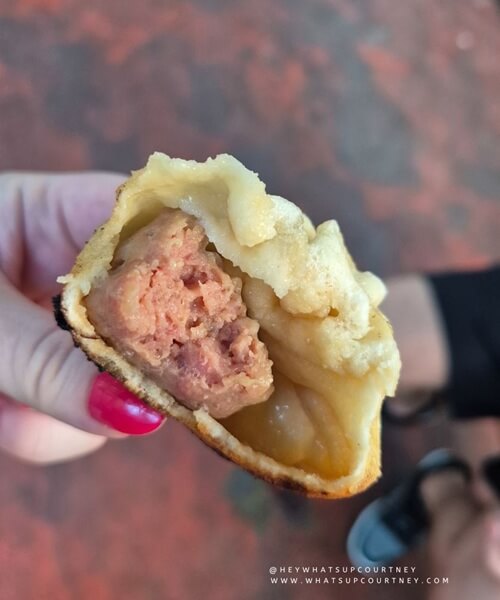
5. Eat Xiaolongbao and Shengjianbao at more than one place (Soup Dumplings)
As you might know by now, Shanghai is the home of the soup dumpling, Xiao Long Bao and you should eat them more than once at more than one place. This is not optional.
This is how I recommend you eat one, pick one dumpling up gently with chopsticks (or scoop it on to your spoon), place it on your spoon, bite a tiny hole in the top, sip the hot soup out carefully because it is very very hot, then eat the rest.
Or pop the whole thing in your mouth in two bites if you’re impatient and can handle the hot liquid. The soup and filling together is a thing of beauty, the skin has to be soft and not too thick.
Jia Jia Tang Bao near Yu Garden on Huanghe Road is the local favourite. Queue of 30 to 45 minutes. The wrappers are thin, the soup is rich, and they sell out by midday. Go on a weekday morning before 10am for the shortest wait.
Yang’s Fry-Dumplings does the pan-fried version, shengjianbao, with a crispy golden bottom and fluffy dough. It’s a completely different experience from the steamed version and you also have to try it. It’s more doughy than the shao long Bao and very traditional Shanghai as it’s a local thing.
Cost: ¥20 to ¥40 for a basket of 6 to 8. For the full food guide, read my what to eat in Shanghai guide
6. Walk Nanjing Road at Night
East Nanjing Road is one of the longest pedestrian shopping streets in the world and walking it at night is worth doing at least once.
The scale of it takes you by surprise. Neon signs everywhere, music from storefronts, people everywhere, little tourist trains running up and down the boulevard.
It’s loud and bright and very much the big-city China version of a high street. I didn’t shop much but definitely did some window shopping. I walked it after the Bund and the atmosphere at night was good for people-watching and street snacks.
Shen Da Cheng is at the eastern end near the Bund. Grab a ¥10 pastry and eat it while you walk.
Cost: Free. Metro Line 2 or 10 to East Nanjing Road Station.
7. See Wukang Mansion
This is the flatiron-shaped building on Wukang Road that’s all over social media, and it was built in 1924 with Red bricks, ornate balconies, a dramatic wedge shape at the junction of two roads.
I went during the Mid-Autumn Festival holiday and the crowds were packed. I couldn’t get a clean photo without waiting for a gap in the tour groups. On a normal weekday it would still be busy, just not that level.
If I were you, I’d get there before 9am. By mid-morning tour groups are queuing for the same angle and patience wears thin. Early morning the light is softer and the pavement is much emptier.
The building is residential so you can’t go inside, but Lao Mai Coffee sits underneath the arched porch at street level and is a good spot for a coffee after. Walk north along Wukang Road from the mansion and the street opens up into one of the prettiest stretches in the city. Historic villas, boutique shops, a beautiful tree canopy overhead.
Cost: Free. Metro Line 10 or 11 to Jiaotong University Station, then a short walk.
After photographing Wukang Mansion, you can explore the surrounding streets:
- Wukang Road: Walk north from the mansion along this beautiful tree-lined street. Historic villas, boutique shops, cafes, and restaurants make this one of Shanghai’s most charming streets for wandering.
- Soong Ching-ling’s Former Residence: Located diagonally opposite Wukang Mansion at 1843 Huaihai Middle Road. This is where Sun Yat-sen’s widow lived, and the residence is now open to the public as a memorial.
- Anfu Road: A few minutes walk from Wukang Mansion, this trendy street is packed with independent cafes, vintage shops, bookstores, and bars. It’s where Shanghai’s creative crowd hangs out.
8. Spend a Morning at the Shanghai Museum
People who say they don’t like museums often like this one. It’s in People’s Square, free to enter which is my kind of language, and has a collection of Chinese bronzes, ceramics, jade, calligraphy, and Ming dynasty furniture. The bronze gallery have pieces that are 3,000 years old!
Allow 2–3 hours. Everything has English descriptions.
One important thing: you cannot buy tickets at the door. Book online at least seven days in advance. Weekends fill up fast. Bring your passport as the name on your booking must match it exactly.
There are now two locations. The original at People’s Square and a newer, larger one in Pudong that opened in February 2024. Check beforehand which has the exhibitions you want before you go.
Cost: Free, but book ahead. Metro Lines 1, 2, or 8 to People’s Square Station.
9. Ride the Shanghai Maglev Train
This is the world’s fastest commercial train at 431km/h and it connects Pudong Airport to Longyang Road metro station in seven minutes.
I rode it on arrival purely for the experience. Watching the speed display climb past 400km/h on what feels like a completely smooth ride is something you don’t forget quickly.
If you’re flying into Pudong, you can take it into the city instead of a taxi. It’s cheaper, faster, and far more interesting. If you’re not flying, it’s a slight detour but worth it if you have the time.
Show your same-day flight ticket at the counter for a ¥40 fare instead of ¥50. Book via [Trip.com affiliate link].
10. Visit Jing’an Temple
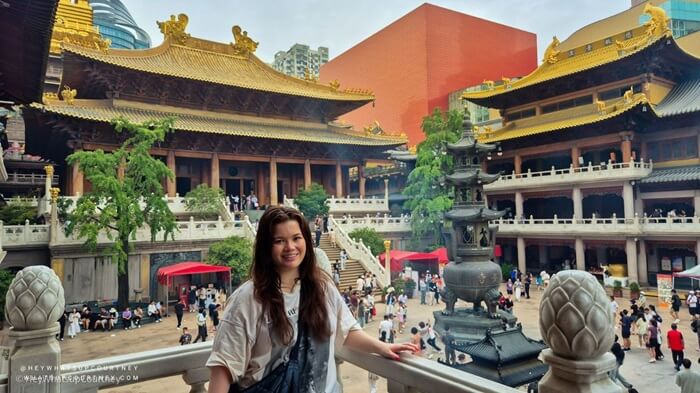
Jing’an Temple location is probably the most surprising for me, it’s smack in the centre of a street full of massive malls and also by the metro too.
The main hall has a large jade Buddha inside and the courtyard is peaceful despite where it is, well with the exception of the centre of the temple, there’s a big tall, not sure the right word for it, but a lot of people were taking coins and trying to throw into the top to get it in. Never found out what it was about but I can assume for good luck.
There’s 2 queues when we arrived, one for Alipay and Wechat, there were a number of people who are directing the crowd.
Also you can hire photographers near the entrance and they will offer to take professional shots and videos of you around the temple and they take some really good ones, I seen a few give their clients instructions on how to pose and the best spots as well.
From Jing’an it’s a short walk to both the Starbucks Reserve Roastery and the Louis Vuitton ship building, which makes this a good starting point for that whole stretch of Nanjing West Road.
Cost: ¥20. Metro Lines 2 or 7 to Jing’an Temple Station, Exit 1.
11. Visit the Starbucks Reserve Roastery
I know what you’re thinking but hear me out.
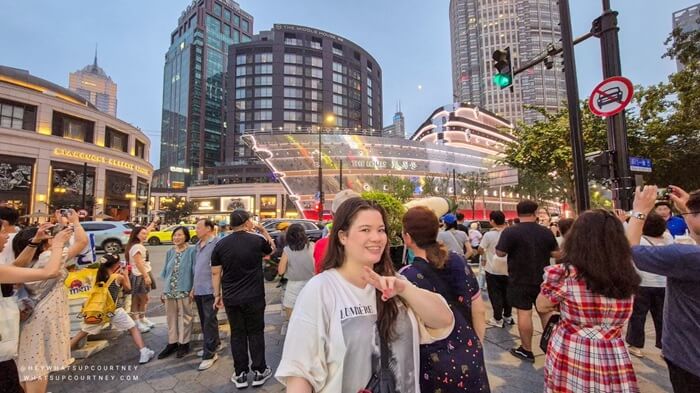
This is not a normal Starbucks. It’s a two-storey roasting facility with a 40-ton copper cask at the centre of the room, brass pipes running through the ceiling that carry roasted beans to different brew stations, six different brewing methods, a cocktail bar, and the longest Starbucks counter in the world. Entry is free though you may have to wait or search for an empty seat during peak hours.
A normal weekday afternoon is the right time to go. I went during the Mid-Autumn Festival holiday and getting a seat was a full on competition. It would be significantly more manageable on a regular week, at least I hope so.
It’s in the same complex as the Louis Vuitton building next door so you can do both in one visit.
Location: 789 Nanjing West Road. Metro Lines 2 or 13 to Nanjing West Road Station. Free entry.
12. See “The Louis” by Louis Vuitton
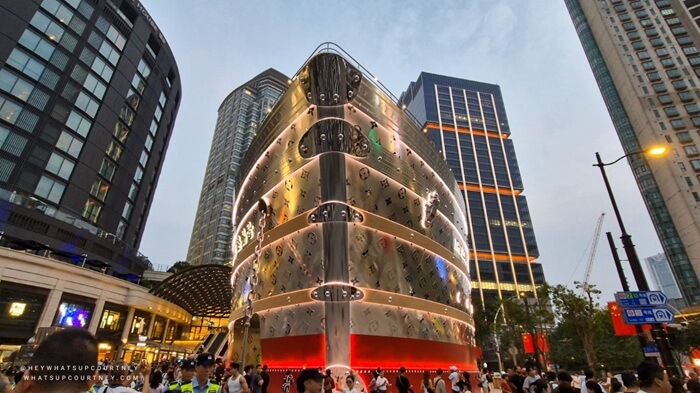
After you visit the Starbucks Reserve Roastery, walk few steps outside and you will see the great Louis ship!
It is massive, and opened in June 2025 and it’s also free to visit (exterior). It’s a silver cruise ship, sitting on Nanjing West Road.
Inside is a free exhibition across two floors about the history and craftsmanship of the brand, with themed rooms, live artisan demonstrations, and a Trunkscape installation at the entrance that’s worth seeing in person.
The third floor has a restaurant from a Michelin-starred chef if you want to make a meal of it and make sure to book in advance/
Even if you don’t go inside, either you come during the day or night time, the ship is a sight to see in real life, very big and there’s also a street market across as well.
You can also hire photographers outside who will take pictures and perhaps videos of you with professional cameras or phones. Literally so many of them outside.
Cost: Free for the exhibition. 789 Nanjing West Road, same complex as the Starbucks Reserve. Open 10am–10pm.
13. Wander Through Tianzifang
Already mentioned this under the French Concession but it deserves its own note. Tianzifang is a pedestrian-only neighbourhood of old shikumen houses converted into shops, galleries, cafes, and bars. It’s more laid-back than Xintiandi nearby and feels less staged.
Go on a weekday afternoon. Weekends during holidays are packed. There are some good spots tucked into the back alleys if you take the time to walk further in.
Cost: Free. Metro Line 9 to Dapuqiao Station, Exit 1.
14. Visit the Jade Buddha Temple
This temple is much quieter than Jing’an temple.
The temple has two jade Buddha statues brought from Burma in 1882. The main one is 1.9 metres tall and sits in its own hall. No photos are allowed inside the hall, which I initially found frustrating. Once inside I understood why. The atmosphere is completely different from the louder tourist sites. Incense, chanting, monks present. It’s the kind of place where you naturally slow down.
Cost: ¥20. Metro Line 13 to Jiangning Road Station, then a 5-minute walk.
15. See Contemporary Art at M50
This is located right next to 1000 Trees, M50 is a complex of former textile factories along Suzhou Creek that now houses over 120 galleries and studios. Most are free to enter.
The vibe is completely different from the polished tourist areas. Graffiti walls, industrial spaces, artists working in open studios, exhibitions that feel current. A weekday afternoon is the best time. The galleries are open but the crowds are minimal.
If you’re combining this with 1000 Trees and a walk along Suzhou Creek, it makes for a very good half-day in an area most short-trip visitors skip entirely.
Cost: Free to enter the complex. Some galleries charge ¥20 to ¥50. Metro Lines 3 or 4 to Zhongtan Road Station, 5-minute walk.
16. Visit the Shanghai Propaganda Poster Art Centre
A small basement museum in an apartment building in the French Concession. Over 3,000 Chinese propaganda posters from the 1950s to 1980s. Bold, colourful, and the English translations are sometimes unintentionally funny.
I don’t think it’s a very popular “tourist attraction” but if history or graphic design interests you, it’s good place to spend an hour of your time.
Check Amaps carefully before you go (Google maps does not work here). It really is in a basement and easy to walk past.
Cost: ¥20. Open 10am to 4pm daily.
17. Take a Day Trip to Zhujiajiao Water Town
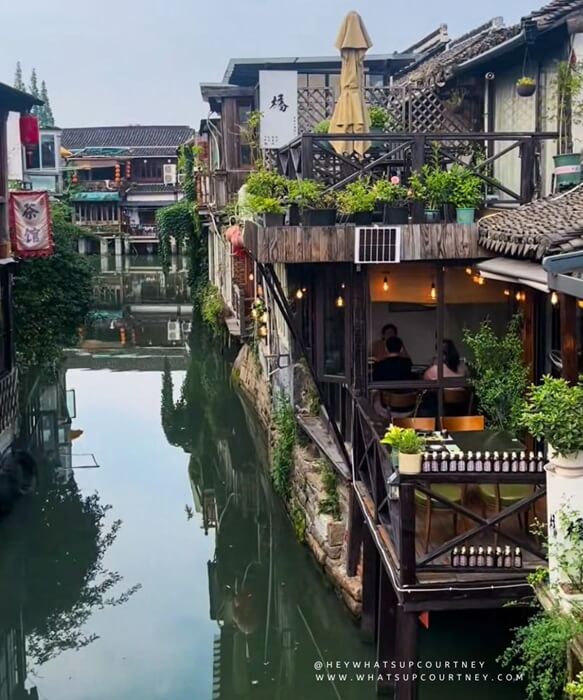
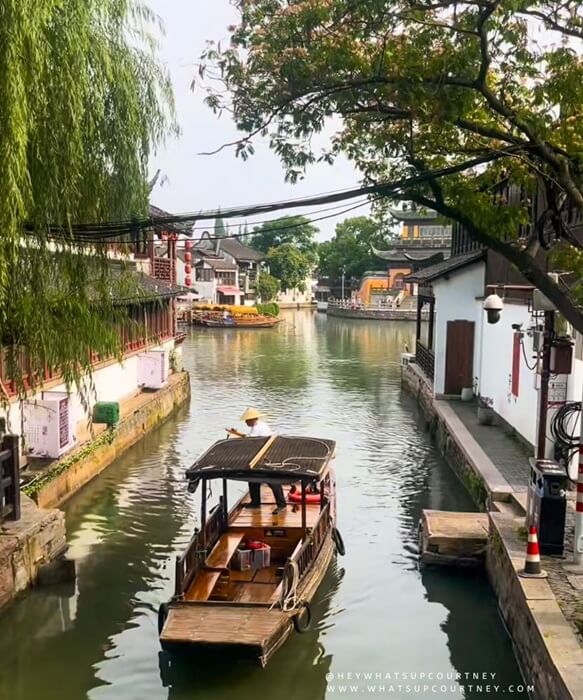
About an hour from Shanghai, Zhujiajiao is a 1,700-year-old water town with canals, stone bridges, wooden boats, and old buildings that look nothing like the city you just left. Try to go on a weekday morning to avoid the biggest crowds.
I would say three to fours hours is enough to wander the main streets, take a boat ride through the canals (¥80–100), cross Fangsheng Bridge from 1571, and wander through the street stalls.
Cost: Town entry free. Individual attractions ¥30–80. There’s a Direct tourist bus from People’s Square around ¥12–20, or Metro Line 17 to Zhujiajiao Station then a short transfer.
There is a tour that goes there called Shanghai Day Tour to Zhujiajiao Water Town and City Attractions(Private Car & Ticket) from Trip.com
18. Eat on Yunnan Road
Yunnan Road is a short lane near People’s Square packed with local food stalls and small restaurants. Xiaolongbao, shengjianbao, stinky tofu, grilled lamb skewers, everything fresh and cheap at ¥10 to ¥30 per dish.
Go at dinner time, roughly 6 to 8pm, when it’s liveliest and everything is freshly made. If you’re not sure what to order, point at what the person next to you is eating. Ensure you have Alipay set up as many stalls don’t take cards but they do take cash if you have some but you may or may not get change back.
19. Take a Huangpu River Cruise (Go at Night)
A cruise gives you a view of both sides: the colonial buildings of the Bund on one side, Pudong’s skyscrapers on the other. An evening cruise is the right call. Seeing the city lights reflected on the water hits differently than the daytime version.
Short sightseeing cruises run 30–60 minutes and cost ¥80–150. Dinner cruises are 2–3 hours from ¥200 upwards. Book via [Klook affiliate link] or [Viator affiliate link] in advance for evening slots.
20. Go Up Shanghai Tower (Skip If Views Aren’t Your Priority)
Shanghai Tower is the tallest building in China at 632 metres. The observation deck is on the 118th floor and the elevator gets you there in 55 seconds.
I amd going to be honest with you and I didn’t go up. The view of Pudong from the Bund at ground level at night time was enough for me and I wasn’t willing to pay ¥180 for the upward version. But if heights and panoramic views are something you enjoy, this is the one to do in Shanghai. I heard people rave about the elevator speed going up so fast.
You can book in advance via [Klook affiliate link] or [GetYourGuide affiliate link]. Metro Line 2 to Lujiazui Station.
21. Visit Shanghai Disneyland
If I had more time, I would have gone to Shanghai Disneyland, it’s one of the only places that has Zootopia. But everyone I spoke to who went absolutely loved it, and by most accounts it’s one of the best Disney parks in the world.
It has unique attractions you won’t find at other parks, including TRON Lightcycle Power Run and a castle that apparently makes every other Disney castle look small. If you’re going with kids or you’re a Disney person, it’s probably already on your list.
Cost: ¥419–719 depending on the day. Book in advance via [Klook affiliate link]. Metro Line 11 to Disney Resort Station.
22. Stroll Through People’s Square and People’s Park
People’s Square is Shanghai’s central public space, surrounded by important buildings like Shanghai Museum, Shanghai Grand Theatre, and the Shanghai Urban Planning Exhibition Center. The square itself is vast, open, and often filled with people flying kites, exercising, or just relaxing.
People’s Park, which borders the square, is lovely for a stroll. Tree-lined paths, small ponds, and lots of green space make it feel like an escape despite being in the heart of downtown Shanghai.
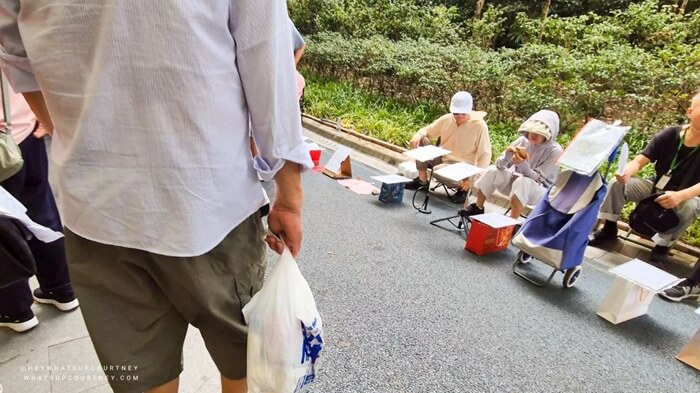
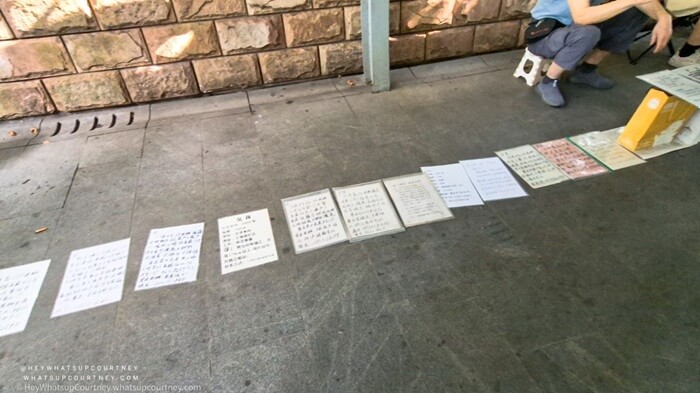
One unique thing I witnessed in People’s Park is the “Marriage Market,” which happens on weekends.
Parents gather with printed resumes for their unmarried children, hoping to find suitable matches. It’s a fascinating cultural phenomenon and interesting to observe respectfully. If you are handsome or pretty and mainly young (sad I know), don’t be surprised if some of the parents approach you. They did not approach us haha.
23. See the 1000 Trees
This one surprises people who haven’t heard of it, and the architecture is truly different.
1000 Trees is a building designed by Thomas Heatherwick, the British architect behind the UK Pavilion at the 2010 Shanghai World Expo.
The building sits on the banks of Suzhou Creek next to the M50 art district and is designed to look like two forest-covered mountains rising from the water. Over 1,000 trees and 250,000 plants grow on top of the structure’s columns, which emerge from the building like giant planters.
Walking around the exterior is free and takes about 20 to 30 minutes. The reflection in Suzhou Creek on a clear day is one of the better photos you’ll take in Shanghai. Inside there are cafes, shops, and gallery spaces. You don’t need to spend anything to get the most out of it.
It’s right next to M50, so combine the two into the same afternoon.
Address: 600 Moganshan Road. Metro: Jiangning Road Station, then a short walk. Free to walk around.
3 Things I Would Skip (Unless They’re Specifically Your Thing)
The Shanghai Propaganda Poster Art Centre
This one is interesting but only if history or graphic design genuinely appeals to you. It’s a small basement museum in a residential building in the French Concession with over 3,000 Chinese propaganda posters from the 1950s to 1980s.
The English translations are sometimes unintentionally funny and the collection is bold and colourful. But it requires specifically seeking it out, it’s easy to walk past even with Google Maps open, and if you’re not already drawn to that kind of thing, an hour in a basement won’t convert you. Skip it on a short trip and only go back for it if you have five days or more and a particular interest.
1000 Trees
The architecture is striking and the photos are everywhere on social media right now, two forest-covered mountains rising from the banks of Suzhou Creek.
I find the issue is the location. It’s located in Putuo District, about 20 minutes from the city centre by metro, and it requires a specific trip rather than fitting naturally into a day around the Bund or French Concession.
If you only have one or two days, that 20-minute journey each way eats into time you could spend somewhere more central. Save it for a longer trip when you can combine it with M50 next door and make an afternoon of both.
The Bund Sightseeing Tunnel
This one I’m slightly on the fence about, but for most visitors it’s skippable. The tunnel runs under the Huangpu River from the Bund to Pudong and costs ¥55 one way.
But the public ferry does the same crossing for ¥2 and gives you actual views of both skylines from the water, which is a much better experience. Unless you’re specifically curious about the tunnel or travelling with children or yourself who’d find it exciting, I would take the ferry instead.
2 Things I Didn’t Do But Would Next Time
Longhua Temple is Shanghai’s largest active Buddhist temple with a seven-storey pagoda. It’s more of a pilgrimage site than a tourist attraction, which is exactly why it’s on the list for next time.
Suzhou or Hangzhou as a day trip. Both are under two hours by high-speed train. Suzhou for the classical gardens, Hangzhou for West Lake. If you have five days or more, one of these is a great use of a full day.
How long do you need in Shanghai?
I would say two to three days would cover the main highlights: the Bund, French Concession, Yu Garden, one museum. Four to five days lets you add day trips, visit Disneyland (which you can still do in 3 day time period) or go slower.
A full week is ideal if you want to eat, shop, explore neighbourhoods and take day trips without rushing too much, and still feel like a person at the end of it.
My Travel Tips for visiting Shanghai
Get a VPN before you arrive. Google, Instagram, WhatsApp and most Western apps are blocked in China. You need a VPN set up on your phone before you land, it won’t work once you’re there. I use [NordVPN affiliate link] and it worked well throughout the trip.
Get an eSIM. China’s networks are different and your home SIM may not work properly. Airalo with China Unicom helped me alot before the flight.
Download WeChat. Everything in China runs through WeChat. Payments, restaurant bookings, ticket reservations. Set it up before you go.
Book attractions in advance. The Shanghai Museum fills up, especially on weekends. Shanghai Tower, Disneyland, and any popular experience should be pre-booked. [Klook affiliate link] is where I booked most things.
Alipay or WeChat Pay. Many stalls and small restaurants don’t take cards. Alipay now works with foreign cards for tourists, set it up before you start exploring.
FAQs About Things to Do in Shanghai
Is Shanghai worth visiting?
Oh yes a hundred percent and very much so. It’s one of the most layered cities I’ve been to.
Is Shanghai expensive?
Hotels can be more expensive than other cities in China but the Food, transport, and entry to most attractions are very reasonable. You can eat really well for very little.
When is the best time to visit Shanghai?
Spring (March–May) or autumn (September–November). Autumn is my favourite. Avoid the major public holidays if crowds bother you. The Mid-Autumn Festival and Golden Week are extremely busy.
Is Shanghai safe?
I felt completely safe the whole trip. Normal city caution applies in busy areas, but that’s true everywhere.
My Final Thoughts on the best things to do in Shanghai
If I had to pick three things you absolutely cannot leave without doing, it’s the Bund at night, Yu Garden at dusk when the bazaar lights up at 6pm, and eating xiaolongbao somewhere with a queue out the door. Those three alone will give you a very good feel for what Shanghai is actually like.
What surprised me most was how much there is to do right in the city centre without needing to travel far between things. The Bund, Yu Garden, Nanjing Road, and People’s Square are all close enough that on most days I was walking between them without even thinking about the metro. For someone who strongly prefers walking over figuring out public transport in a new city, Shanghai was a very pleasant surprise.
The food, the bakeries, the temples appearing between skyscrapers, the bazaar lighting up at dusk. It’s a city that keeps giving you things you weren’t expecting, and that’s the best kind of trip.
I hope this guide helps you figure out what to prioritise. If you’re short on time, start with my 1 day in Shanghai itinerary and you can plan from there. Happy Travels!
Courtney xx
Affiliate disclosure: Some links in this post are affiliate links. If you book through them I may earn a small commission at no extra cost to you. I only recommend experiences and hotels I have personally visited or thoroughly researched. Thank you!
Plan Your Shanghai Trip
My Shanghai travel guides will help you plan for your China trip:
Chinese New Year Traditions Explained: What They Mean & How to Celebrate
First Time in Shanghai: Everything I Wish I Knew Before Going (2026)
Leave a Reply